
Most people think tantric massage is just a slower, softer version of erotic massage. They walk in expecting a specific outcome-usually sexual release-and leave frustrated when the session feels like "just a massage." But what if the real power isn't in the destination, but in how you touch along the way? The concept of touch without expectation flips this script entirely. It’s not about avoiding intimacy; it’s about removing the pressure that kills genuine connection.
This approach has shifted from niche spiritual practice to a recognized therapeutic tool, especially in places like the Czech Republic where centers have been refining these methods since around 2010. Today, we’re going to break down exactly how to train this skill deliberately. Whether you’re a practitioner looking to deepen your craft or someone wanting to improve intimacy with a partner, learning to touch without an agenda is a game-changer.
The Core Philosophy: Presence Over Performance
To understand touch without expectation, you first have to let go of the idea that massage is a transaction. In standard Swedish or deep tissue massage, the goal is physical relief. In many erotic contexts, the goal is sexual climax. Both are valid, but they create a mental roadmap: I do X so Y happens.
Tantric touch removes the "so." You touch because you are touching. This sounds simple, but it’s incredibly difficult for modern minds wired for efficiency. According to experts like Martina Vyborná, who has worked in this field since 2008, the key is guiding the client into "loving presence and relaxation through conscious touch on the whole body without expectation or focus on results."
Why does this matter? Because expectation creates tension. When you touch someone while secretly hoping for a reaction, your hands tighten, your breath shortens, and your energy becomes needy. The recipient feels this subtle pressure immediately. Touch without expectation allows the nervous system to truly unwind. It transforms the session from a performance into a shared experience of being alive in the moment.
Breath as the Steering Mechanism
You cannot separate touch from breath in tantric practice. As Verka Křenčejová notes, "without breath, you cannot experience what this massage promises (such as full-body orgasm or the expansion of sexual/kundalini energy throughout the body)." Breath is the vehicle that carries intention.
When training deliberate touch, start by syncing your breath with your movements. Here is a practical framework:
- Inhalation: Prepare the space. Visualize energy gathering in your palms. Move slowly toward the area you intend to touch.
- Contact: Make contact on the exhale. This signals safety to the receiver’s nervous system. Exhaling releases tension; inhaling can sometimes trigger alertness.
- Sustain: Maintain steady, rhythmic breathing while holding or stroking. If you hold your breath, you create anxiety. If you breathe too shallowly, you stay stuck in your head rather than connecting with your body.
- Release: Lift your hands on an inhale, preparing for the next cycle.
Beginners often struggle here. Data suggests up to 40% of new practitioners find it hard to "direct sexual energy to the heart center and up to the head for integration." This means they get stuck in their lower chakras (hips/groin) or their heads (thinking). The fix? Practice breathing exercises separately from massage. Learn to feel your breath move from your belly to your chest to your throat before you ever touch another person.

Setting Boundaries: The Ritual of Preparation
Paradoxically, freedom requires structure. You can’t be present if you’re worried about crossing a line. A clear ritual prepares both the giver and receiver for vulnerable work. This isn’t just about consent forms; it’s about creating a container of trust.
Before any touch begins, engage in a boundary conversation. Ask specific questions:
- Are there areas of your body you do not want touched today?
- What kind of pressure feels good to you right now (light/feather vs. firm/deep)?
- Is there anything you need to know about my style or pace?
Martina Vyborná emphasizes that clear communication of boundaries and rules for touches with respect for personal comfort is a crucial element of this technique. This ritual shifts the dynamic from "what will happen to me?" to "we are co-creating this safe space."
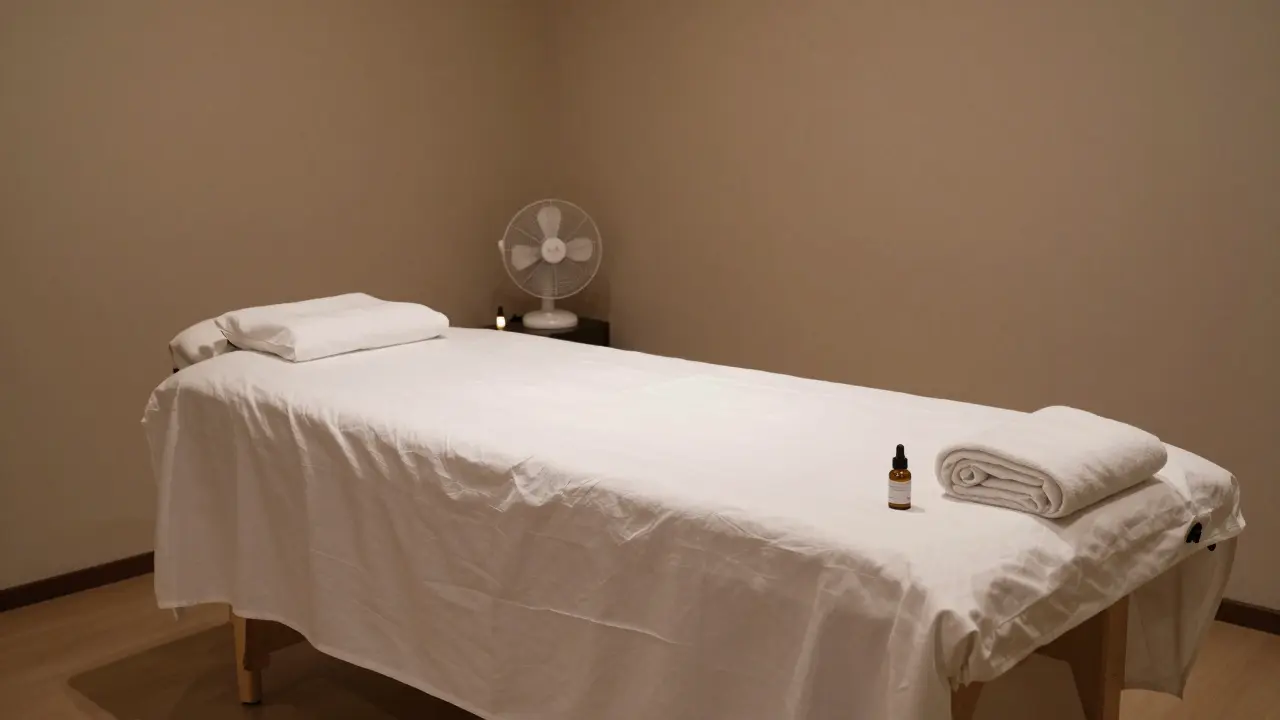
Also, prepare the environment. Research indicates optimal room temperature should be between 24-26°C (75-79°F) with dimmed lighting. Cold rooms cause muscle guarding; bright lights keep the mind active. Use oils, fans, or soft fabrics to vary sensory input. These tools aren’t distractions-they’re anchors that help keep attention in the body rather than the mind.
Varying the Touch: From Feather to Firm
One of the biggest mistakes beginners make is monotony. Rubbing oil in circles for an hour is relaxing, but it doesn’t train awareness. Tantric touch is highly variable. As noted by UčernéVenuše.cz, tantra massage distinguishes itself by alternating different types of touch-from delicate, caressing strokes to firmer, grounding pressure.
To train this deliberately, practice three distinct textures:
| Touch Type | Description | Purpose |
|---|---|---|
| Feather Light | Using fingertips or knuckles barely grazing the skin. | Activates surface nerve endings; heightens sensitivity without triggering defensive reflexes. |
| Gliding/Stroking | Long, smooth strokes using palm and forearm with oil. Speed: 2-5 cm/s. | Creates flow and rhythm; helps synchronize breath between giver and receiver. |
| Firm/Grounding | Deep pressure using thumbs or elbows on muscles. | Releases stored tension; provides a sense of safety and containment. |
Start your sessions on neutral zones: feet, hands, back. Avoid genitals initially. Why? Because those areas carry heavy emotional charge. If you can’t touch a foot without thinking about sex, you won’t be able to touch intimate areas with clarity. Master neutrality first. Let the sensation of skin-on-skin be enough. Ask yourself: What does this skin feel like? Is it warm? Cool? Rough? Smooth? Stay curious, not judgmental.
Overcoming Common Pitfalls
Even with good intentions, several traps can derail your practice. Recognizing them early saves time and frustration.
The "Fixer" Mindset: Many people enter tantric work wanting to heal their partner or themselves. This is well-meaning but counterproductive. Healing cannot be forced. If you touch to "fix" shame or trauma, you reinforce the idea that something is broken. Instead, touch to witness. Be present with whatever arises-pleasure, pain, numbness, boredom-without trying to change it.
Emotional Overload: Psychologist Petr Dvořák warns that without proper guidance and clear boundaries, this technique can lead to emotional overload, especially for clients with past trauma. If you feel overwhelmed during a session, pause. Return to your breath. Place a hand on your own heart center. Ground yourself. It’s okay to stop. Safety always comes before depth.
Impatience with Results: Users often report disappointment when they don’t achieve a "full-body orgasm" immediately. One client shared, "I thought it would be sexual, but it was just a massage." This mismatch of expectations is common. Remember, the benefit isn’t just the peak experience; it’s the daily shift in how you relate to your body. Studies show 68% of participants report significant improvement in intimate life after three months of regular training-not overnight, but steadily.
Integrating Into Daily Life and Relationships
The ultimate goal of training touch without expectation isn’t just better massages-it’s better living. How do you bring this off the mat and into your bedroom or living room?
Start small. Try a five-minute "non-goal" touch session with a partner. Sit facing each other. Hold hands. Breathe together. Don’t speak. Just notice the warmth, the pulse, the texture. If your mind wanders to dinner plans or work emails, gently bring it back to the sensation in your palms. This builds the muscle of presence.
For couples, this technique can revolutionize intimacy. Up to 65% of clients use learned techniques in partnerships. By removing the pressure to perform sexually, you create space for genuine desire to emerge naturally. Desire follows connection, not the other way around.
If you’re serious about mastering this, consider formal training. In regions like the Czech Republic, complete courses range from 8,000 to 15,000 CZK for six sessions. Look for certified instructors through organizations like Tantra Česko. Ensure they emphasize ethics, boundaries, and psychological safety, not just physical techniques.
Touch without expectation is a radical act in a world obsessed with outcomes. It asks you to trust the process, honor the present, and connect deeply without demanding anything in return. That’s not just great massage-that’s profound human connection.
How long does it take to learn touch without expectation?
Basic principles can be practiced immediately, but deep mastery typically takes 6-8 weeks of consistent training. Most people notice significant shifts in their ability to stay present after 4-6 sessions. Full integration into daily relationships may take 3 months or more of regular practice.
Is tantric massage without expectation the same as erotic massage?
No. Erotic massage often aims for sexual arousal or intercourse as a primary goal. Tantric massage without expectation explicitly excludes this aim. While sexual energy may arise, the focus remains on holistic presence, breath, and emotional connection rather than sexual release.
Can I practice this alone?
Yes. Self-massage is a powerful way to learn conscious touch. Start by touching your own arms, legs, and face with slow, intentional strokes while focusing on your breath. Notice sensations without judgment. This builds self-awareness and reduces body shame, which translates directly to better partnered touch.
What should I do if I feel uncomfortable during a session?
Stop immediately. Communication is essential. Say, "I need a pause," or adjust your position. Discomfort is normal, especially when exploring vulnerability. A skilled practitioner will welcome your feedback and help you ground yourself through breathing or gentle pressure changes.
Do I need special equipment for tantric massage training?
Not really. High-quality massage oil, a comfortable surface, and a warm, quiet room are sufficient. Some practitioners use fans, silk scarves, or feathers to vary sensory input, but these are optional enhancements. The most important "tool" is your focused attention and breath.