
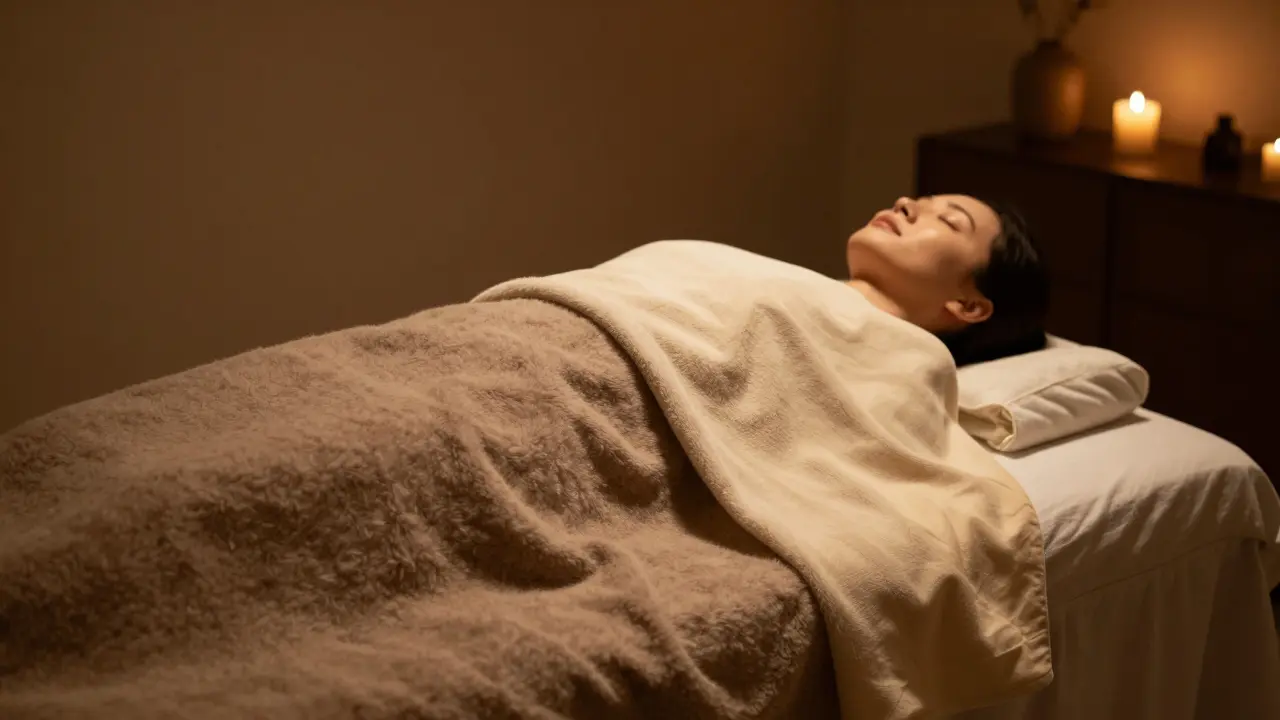
Imagine a room warmed to exactly 25°C. The air is still. You are lying on a table, covered not just by a sheet, but wrapped in layers of soft wool, silk, or heated linen. A practitioner moves over you, but their hands never directly touch your skin. Instead, they glide through the fabric. It sounds counterintuitive for a practice often associated with deep intimacy, yet Tantric massage is a holistic bodywork technique that focuses on energy flow, conscious touch, and emotional connection rather than purely physical relaxation. Within this discipline, using textiles is not a barrier; it is a bridge.
Many people assume that tantric massage requires immediate nudity and direct skin-to-skin contact from the first minute. This misconception can actually create anxiety for clients who are new to bodywork or those carrying past trauma. Working through textiles offers a controlled, safe environment where the nervous system can learn to trust touch before fully opening up. It transforms the session from a performance into a slow, deliberate exploration of sensation.
The Psychology of Indirect Touch
Why would anyone choose fabric over bare skin? For many, the answer lies in the concept of "sensory gating." Our brains filter out constant background stimuli to focus on what matters. When we receive direct, intense tactile stimulation immediately, our brain might categorize it as overwhelming or threatening, especially if we have unresolved issues with vulnerability. Textiles act as a buffer.
This buffer allows the client to observe their reactions without feeling exposed. You can feel the pressure, the temperature, and the movement, but the visual and psychological intensity of nakedness is reduced. According to practitioners like Barbora Jurkovičová, a certified tantric therapist, this phase-often called a "touch tasting"-helps clients distinguish between different types of stimulation. It teaches the body what feels soothing versus what feels stimulating, creating a map of personal preference that guides the rest of the session.
Consider the difference between being grabbed suddenly and having a feather brushed lightly across your arm through a thin shirt. The latter invites curiosity; the former triggers defense. By starting with textiles, the practitioner ensures that the client’s primary response is one of interest rather than resistance. This is particularly crucial for individuals recovering from physical injuries or emotional trauma related to touch.
Essential Tools and Materials
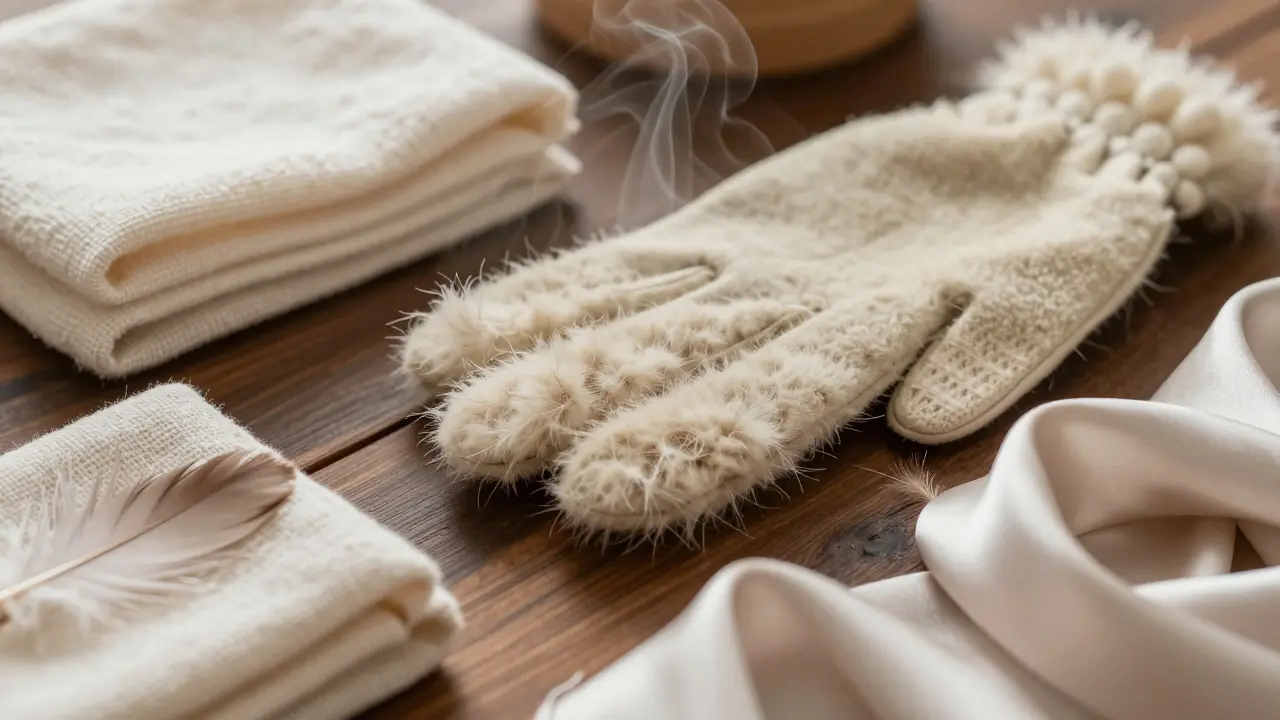
Not all fabrics serve the same purpose. In a professional setting, the choice of textile is deliberate, each material chosen for its specific sensory properties. Here are the most common tools used in textile-based tantric work:
- Hot Towels: Heated to approximately 40-45°C, these are placed on the back, chest, or legs before any manual work begins. The heat penetrates deep into the tissues, relaxing muscles and calming the nervous system. It signals safety to the body before any movement occurs.
- Fur Gloves: Often made from sheepskin or synthetic alternatives, these provide a soft, diffuse touch. They eliminate the sharpness of fingertips, creating a broad, gentle sensation that covers large areas of the body without pinpoint pressure.
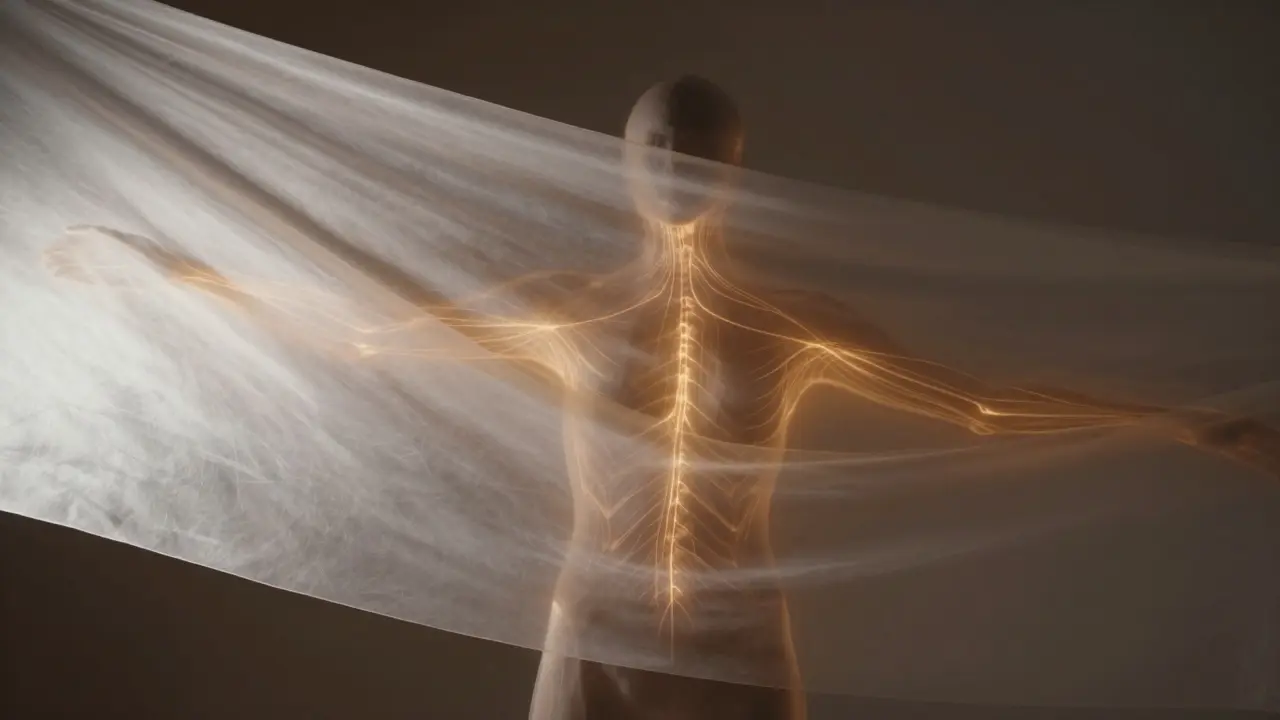
- Ostrich or Peacock Feathers: Used for the lightest possible stimulation. These tools help awaken the skin’s surface nerves (mechanoreceptors) without causing friction or heat buildup. They are ideal for tracing energy pathways along the spine or limbs.
- Silk Scarves: Silk has a unique thermal conductivity-it feels cool when first touched but warms quickly. Sliding a silk scarf over the body creates a sensation of fluidity and smoothness, encouraging the imagination and mental relaxation.
- Cotton Sheets: Simple, breathable cotton is used for grounding. It provides a sense of containment and security, allowing the client to feel held and supported.
The key is variety. Switching between these materials keeps the senses engaged and prevents habituation, where the brain stops noticing a stimulus because it becomes repetitive. Each change in texture prompts a fresh neural response, keeping the client present in the moment.
When to Use Textile Techniques
While textile work is beneficial for many, it is not always necessary. Understanding when to apply this method is part of a skilled practitioner’s expertise. Here are the primary scenarios where working through fabric is highly recommended:
- First-Time Clients: If someone has never experienced tantric or sensual massage, the unknown can be frightening. Textiles provide a familiar layer of clothing, reducing the shock of undressing and exposing oneself.
- Trauma Survivors: For individuals with histories of sexual assault or physical abuse, direct touch can trigger flashbacks or panic attacks. Fabric acts as a protective boundary, allowing them to control the level of exposure. They can decide later if they want to remove the layer.
- Highly Sensitive Individuals: Some people have heightened tactile sensitivity (hyperesthesia). Direct skin contact might feel abrasive or painful. Textiles soften the input, making it manageable and enjoyable.
- Energy Blockages: In tantric theory, certain areas of the body may hold dense emotional energy. Practitioners sometimes use hot towels or weighted blankets to gently coax these areas open before applying hand pressure.
- Cold Environments: If the room temperature cannot be maintained at an optimal 24-26°C, textiles help retain body heat, preventing shivering which disrupts relaxation.
Conversely, if a client is experienced, seeks deep tissue release, or specifically desires intimate skin-to-skin connection, skipping the textile phase may be more efficient. However, even in these cases, a brief period of indirect touch can serve as a valuable warm-up.
| Feature | Direct Skin Contact | Textile-Mediated Touch |
|---|---|---|
| Pace | Faster progression to deep states | Slower, gradual buildup |
| Safety Perception | Higher vulnerability | Higher sense of security |
| Sensory Focus | Intensity and friction | Temperature and texture variation |
| Best For | Experienced clients, couples | Beginners, trauma survivors, sensitive skin |
| Duration | Standard (60-90 mins) | Extended (90-120 mins) |
Practical Application: The Step-by-Step Process
If you are a practitioner learning this technique, or a client wanting to understand what to expect, here is how a typical textile-focused session unfolds. The goal is synchronization between breath, touch, and intention.
1. Preparation and Environment
The room must be prepared meticulously. Heat the space to 24-26°C. Prepare hot towels in a warmer set to 45°C. Lay out your textiles: fur gloves, feathers, and silk scarves within easy reach. Ensure the music is low-frequency and rhythmic to encourage breathing.
2. Breathing Synchronization
Before touching the client, stand beside them and match your breathing pattern. Invite the client to breathe deeply into their belly. This establishes a non-verbal connection and calms the autonomic nervous system. When the client exhales, their muscles naturally relax; this is the window for touch.
3. Thermal Introduction
Place the hot towels on the client’s back and shoulders. Hold them there for 2-3 minutes. Ask the client to notice the heat spreading. This step alone can induce significant relaxation. Remove the towels slowly, wiping away any residual moisture.
4. Texture Exploration
Using the fur gloves, begin gliding over the client’s arms and legs through their clothes or a thin sheet. Move slowly, following the natural lines of the body. Do not press hard; let the weight of your hands do the work. Observe the client’s breathing. If it becomes shallow, pause. If it deepens, continue.
5. Feather Stimulation
Switch to the feather. Lightly trace the spine, avoiding the vertebrae directly, focusing on the muscles alongside it. Then move to the palms and soles, which are rich in nerve endings. This stimulates the vagus nerve, promoting parasympathetic activity (rest and digest).
6. Transition Decision
After 15-20 minutes of textile work, check in with the client. Ask if they feel ready to remove the covering or if they wish to continue with the current level of stimulation. Respect their choice. There is no penalty for staying under the fabric longer.
Common Misconceptions and Challenges
Despite its benefits, textile work faces criticism. Some argue it prolongs the session unnecessarily. A 2024 survey of 127 clients showed that while 68% found the textile phase calming, 23% preferred a quicker transition to direct contact. This highlights the importance of customization. One size does not fit all.
Another concern is the potential for dependency. If a client only ever experiences touch through fabric, they may struggle to engage with direct intimacy outside the therapy room. Practitioners must ensure that textile work is a stepping stone, not a permanent state. Regular check-ins help assess progress and adjust the approach accordingly.
Cost is also a factor. Sessions involving extensive textile preparation often last longer and require more materials, leading to higher prices. In some regions, such sessions cost 15% more than standard massages. Clients should view this as an investment in personalized care rather than an extra fee.
Future Trends: Technology Meets Tradition
The field is evolving. Recent innovations include "smart textiles" embedded with sensors that monitor skin temperature, humidity, and muscle tension. These fabrics provide real-time feedback to the practitioner, indicating areas of stress or relaxation. While currently expensive (ranging from $850 to $1,200 per unit), these tools promise greater precision in mapping energetic responses.
However, experts warn against over-reliance on technology. The essence of tantric massage lies in human intuition and empathy. Sensors can data points, but they cannot replicate the subtle energy exchange between two people. The future likely holds a hybrid approach: using technology for initial assessment, then relying on traditional skills for the therapeutic work.
Is tantric massage through textiles considered erotic?
While tantric massage can be sensual, the primary goal of textile work is therapeutic and educational. It focuses on awareness, relaxation, and energy flow rather than sexual arousal. The fabric acts as a neutral medium that reduces sexual tension and emphasizes mindfulness. Many clients find it deeply connecting without it being explicitly erotic.
How long does a textile-based tantric massage session last?
Sessions typically last between 90 and 120 minutes. This extended duration accounts for the slower pace of indirect touch, the time needed for heating towels, and the gradual transition to deeper states. Standard massages usually run for 60-90 minutes, so expect to allocate more time for this approach.
Can I request to skip the textile phase?
Yes, absolutely. Communication is central to tantric practice. If you prefer direct skin contact from the start, inform your practitioner beforehand. They will respect your preference and adjust the session accordingly. However, they may still suggest a brief warm-up with hot towels for physiological benefit.
What should I wear during a textile massage?
You can remain fully clothed in loose, comfortable attire, or wear minimal underwear depending on your comfort level. The practitioner will use additional sheets and blankets to cover you. The key is that you feel secure and unexposed. Discuss your clothing preferences during the consultation.
Are smart textiles widely available for home use?
Currently, smart textiles for tantric massage are primarily used in professional clinics due to their high cost and specialized nature. They are not yet common for home use. As technology advances and prices drop, consumer versions may become available, but for now, they remain a niche tool for advanced practitioners.