You know that feeling when you’re so numb to your own body that a gentle touch feels like nothing? Or worse, you feel everything too intensely, but it’s just anxiety or tension, not pleasure? We live in a world that numbs us. Screens, stress, and sedentary jobs have turned our bodies into background noise. Tantric massage isn’t just a spa treatment; it is a rigorous form of perception training designed to reawaken bodily sensitivity and reconnect the mind with physical sensation. It’s not about rushing toward a finish line. It’s about learning to listen again.
Quick Summary / Key Takeaways
- It’s training, not just relaxation: Tantric massage rewires how your brain processes touch, moving from local genital focus to whole-body awareness.
- Sensitivity is gradual: Your body has likely built up layers of "numbness" due to trauma or stress. Reclaiming sensitivity takes time and patience, not instant results.
- Intent matters most: The difference between erotic and tantric touch is the goal. One seeks stimulation; the other seeks connection and energy flow.
- Emotional release is normal: Expect tears, laughter, or anger. Blocked emotions often surface when physical tension releases.
- Communication is key: You must set clear boundaries beforehand. The practitioner follows your lead, not a rigid script.
Redefining Touch: From Numbness to Awareness
Most of us don’t actually feel our bodies. We feel pain when we hit a table, maybe hunger when our stomach growls, but do you feel the skin on your arms? Do you notice the temperature change when air hits your neck? Probably not. This is sensory habituation. Your brain filters out constant stimuli to save energy. But in doing so, it filters out subtle pleasures, too. Bodily sensitivity is the ability to perceive fine details of physical sensation. In a typical Western context, we are trained to disconnect from this. We sit in chairs, stare at screens, and ignore the signals our muscles send us. Tantric massage challenges this disconnection. It uses specific techniques-varying pressure, speed, and texture-to force your nervous system to pay attention. It’s not magic. It’s neuroplasticity in action. By repeatedly exposing your nerves to mindful touch, you lower the threshold for what registers as "feeling." Suddenly, a feather-light stroke doesn’t just tickle; it sends a wave of awareness through your spine. This is the core of perception training: shifting from passive existence to active sensing.
The Mechanics of Perception Training
How does this actually work in practice? Unlike a Swedish massage, which follows a predictable path to relax muscles, or a sports massage, which targets injury recovery, tantric massage is intuitive and variable. There is no fixed sequence of strokes. Why? Because every body holds tension differently. One person might hold stress in their jaw; another in their hips. The practitioner reads these cues in real-time.
A common technique involves a "touch tasting" phase. Using tools like peacock feathers, fur gloves, or warm towels, the practitioner introduces varied textures. This isn’t just for show. Different textures stimulate different types of nerve endings (Meissner’s corpuscles for light touch, Pacinian corpuscles for deep pressure). By alternating between these sensations, the massage prevents sensory adaptation. Your brain can’t tune it out because the input keeps changing.
Another critical component is breathwork. Most people breathe shallowly into their chest when stressed. During a tantric session, you are guided to breathe deeply into your belly and pelvis. This activates the parasympathetic nervous system-the "rest and digest" mode. When you combine deep breathing with mindful touch, you create a feedback loop. The breath calms the mind, allowing the body to receive more signal. The increased sensitivity then encourages deeper, more relaxed breathing. It’s a physiological hack to boost awareness.

Tantric vs. Erotic: The Critical Distinction
Let’s clear up the biggest misconception right now. Is tantric massage just fancy foreplay? No. The line is thin, but it exists, and it lies entirely in the intent.
| Feature | Tantric Massage | Erotic Massage |
|---|---|---|
| Primary Goal | Whole-body awareness, emotional release, energy flow | Sexual arousal, genital stimulation, orgasm |
| Touch Focus | Distributed across the entire body, including non-erogenous zones | Concentrated on erogenous zones and genitals |
| Pace | Slow, meditative, allowing time for sensation to build | Often faster, building toward a climax |
| Outcome | Full-body orgasm (energy surge) or deep calm | Genital orgasm and immediate release |
| Mental State | Mindfulness, presence, observation | Fantasy, anticipation, performance |
In tantric practice, the goal is often described as a "full-body orgasm." This doesn’t mean you’re having an orgasm everywhere at once. It means the peak of pleasure isn’t localized in the genitals. Instead, sexual energy (often referred to as Kundalini in traditional texts) rises through the spine and circulates throughout the body. You might feel tingling in your hands, warmth in your chest, or a rush behind your eyes. This requires you to stop focusing exclusively on the groin. If you chase the classic orgasm, you miss the broader experience. You have to trust the process and let go of the need for a specific endpoint.
Overcoming Trauma and Emotional Blocks
Here is the hard truth: many people cannot feel pleasure because they are protecting themselves from pain. Our bodies keep score. If you’ve experienced trauma, abuse, or even just chronic stress, your body may have developed protective armor. Muscles tighten. Breathing becomes shallow. Sensitivity drops. This is a survival mechanism, not a defect.
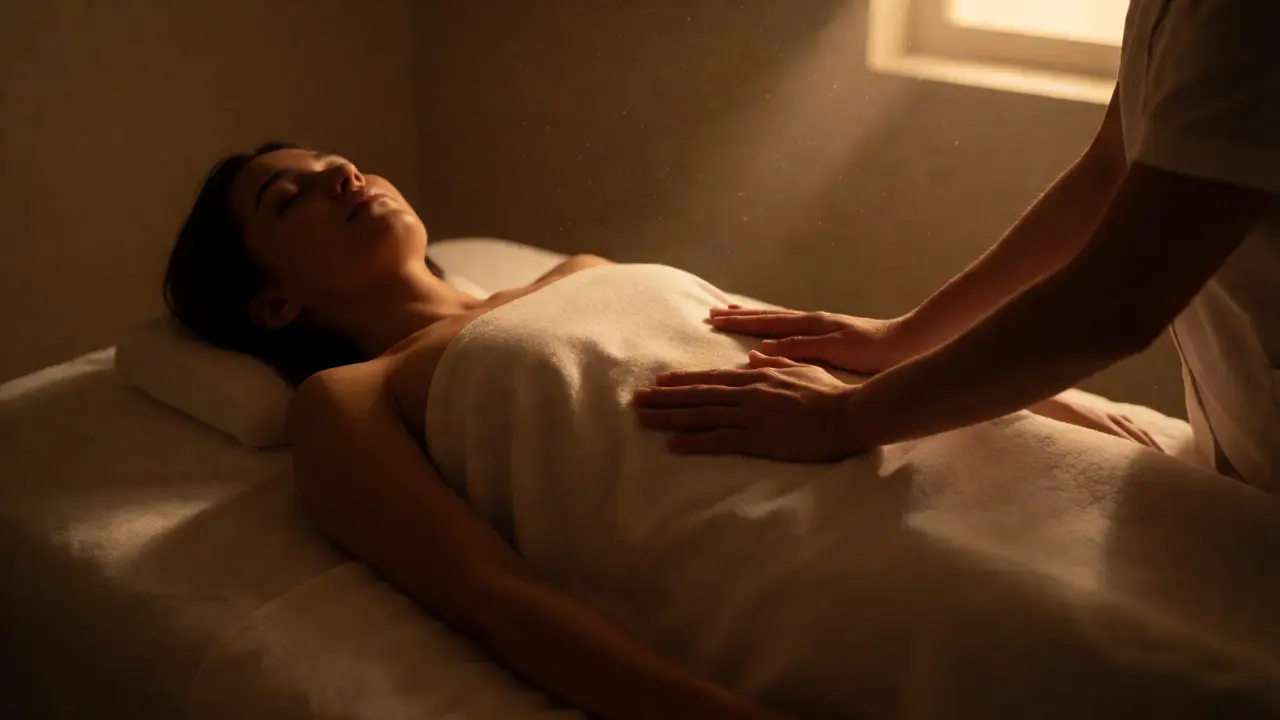
Tantric massage creates a safe container to dismantle this armor slowly. Because the practitioner is trained to respect boundaries, you remain in control. You can say "stop," "softer," or "skip that area" at any time. This agency is crucial. When you realize you can set limits and be respected, your nervous system begins to downregulate its threat response. As the guard comes down, suppressed emotions often rise to the surface. It is not uncommon to cry during a session. This isn’t sadness necessarily; it’s the release of stored tension. Many practitioners describe this as "emotional detoxification." Once the blockage clears, new capacity for sensitivity opens up. You aren’t just getting a massage; you’re healing the relationship with your own flesh.
Practical Steps for Beginners
If you’re considering trying this, don’t expect to walk out feeling enlightened after one hour. Treat it like going to the gym. You wouldn’t expect to lift heavy weights on day one. Here is how to approach your first few sessions effectively:
- Set Clear Intentions: Before booking, ask yourself what you want. Is it relaxation? Connection? Healing? Communicate this to the practitioner. If you want to avoid certain areas, say so upfront. There is no judgment here.
- Manage Expectations: Drop the idea of the "big O." Go in curious, not demanding. Ask yourself: "What does my left shoulder blade feel like right now?" Stay present in small details.
- Prepare Physically: Avoid heavy meals two hours before. Hydrate well. Wear comfortable clothing you can easily remove if needed. Arrive early to settle your mind.
- Communicate During: Silence is good, but not mandatory. If a touch feels wrong, speak up. If something feels amazing, let them know. Feedback helps the practitioner adjust to your unique sensitivity map.
- Integrate Afterward: Don’t jump straight back into emails. Spend 15-30 minutes resting afterward. Drink water. Journal about what you felt. Did you notice any unexpected emotions? Write them down.
Remember, sensitivity returns slowly. Some people report changes after one session; others take months. Be patient with your body. It has been ignoring you for years; give it time to start listening again.

Related Concepts and Further Exploration
To deepen your understanding, consider exploring related practices. Somatic Experiencing is a therapy method that focuses on releasing traumatic shock trapped in the body. While different in approach, it shares the belief that the body holds unresolved experiences. Similarly, Mindfulness Meditation trains the same attentional muscles used in tantric massage. Practicing body scans during meditation can help you become more aware of subtle sensations in daily life, making your massage sessions more effective.
Also, look into Kundalini Yoga. Traditional tantric philosophy views the body as a channel for energy. Understanding the basic concepts of chakras (energy centers) can provide a framework for interpreting the sensations you feel during a massage. For example, tingling in the base of the spine relates to the root chakra, while warmth in the heart center relates to the heart chakra. These aren’t just mystical ideas; they are maps of where people tend to hold tension and emotion.
Frequently Asked Questions
Is tantric massage always sexual?
No. While it works with sexual energy, it is not inherently sexual in the act itself. It is a holistic therapy that includes the sexual aspect of being human but does not require sexual intercourse or explicit genital manipulation unless agreed upon. The focus is on energy flow and awareness, not just physical gratification.
How long does it take to regain bodily sensitivity?
This varies greatly depending on individual history. For some, minor improvements occur after one session. For those with significant trauma or long-term dissociation, it may take several months of regular practice. Consistency is more important than intensity. Regular, shorter sessions often yield better results than occasional marathon sessions.
What should I wear during a tantric massage?
Usually, clients are fully nude or wear underwear, depending on personal comfort and the practitioner's policy. The key is that you feel free to move and breathe without restriction. Always discuss your comfort level with nudity before the session begins. You can choose to stay clothed if you prefer, though skin-to-skin contact is often central to the practice.
Can men benefit from tantric massage?
Absolutely. Men often suffer from performance anxiety and a narrow definition of pleasure focused solely on ejaculation. Tantric massage helps men slow down, expand their capacity for pleasure beyond the genitals, and connect with their emotions. It can significantly improve intimacy with partners by teaching men to appreciate the journey rather than just the destination.
What if I get an erection during the massage?
For men, this is a natural physiological response to increased blood flow and relaxation, especially in the pelvic region. It does not necessarily mean you want sex. Experienced practitioners understand this and will continue the session calmly. They may shift focus away from the genital area temporarily to allow the energy to circulate elsewhere. Do not feel embarrassed; it is part of the body's response to being awakened.
Next Steps and Troubleshooting
If you try tantric massage and feel overwhelmed, step back. Try a standard therapeutic massage first to build trust with a practitioner. If you feel bored, check your mindset. Are you judging the experience? Try closing your eyes and focusing only on the sound of your breath. If you feel emotionally raw afterward, be gentle with yourself. Rest, hydrate, and avoid high-stress situations for the rest of the day. This practice is a marathon, not a sprint. Keep showing up for your body, and it will eventually return the favor.