Tantra Salon Security Checklist
This tool helps you evaluate if a tantra salon meets essential security standards discussed in the article. Check all requirements that are in place at the salon you're considering. The more requirements met, the safer the environment is likely to be.
There’s no official handbook for security in tantra salons. No government agency publishes a checklist. No industry association mandates camera placements or background checks. And yet, people walk into these spaces expecting safety-emotional, physical, and legal. If you’ve ever wondered what really happens behind closed doors in a professional tantra salon, you’re not alone. The truth is, security isn’t just about locks and cameras. It’s about trust, boundaries, and systems that don’t exist on paper but are built day by day by the people who run these spaces.
What Makes Tantra Salons Different?
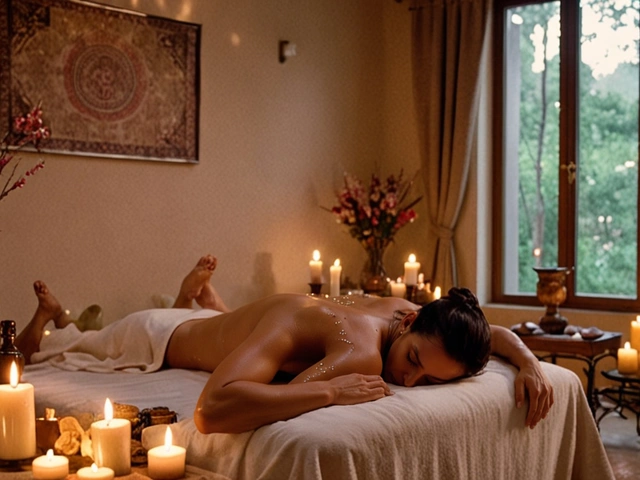
Tantra salons aren’t spas. They’re not massage clinics. And they’re definitely not brothels. They sit in a legal gray zone where wellness, spirituality, and sensuality overlap. In places like Prague, Vienna, or even Adelaide, practitioners use the word "tantra" to describe sessions that involve breathwork, energy work, non-goal-oriented touch, and deep presence. But because there’s no legal definition, anyone can open a "tantra salon"-even without training, certification, or insurance. That’s where security becomes critical. Without clear rules, clients can’t know what to expect. Practitioners can’t protect themselves. And if something goes wrong, there’s often no one to turn to.Physical Security: Beyond the Lock on the Door
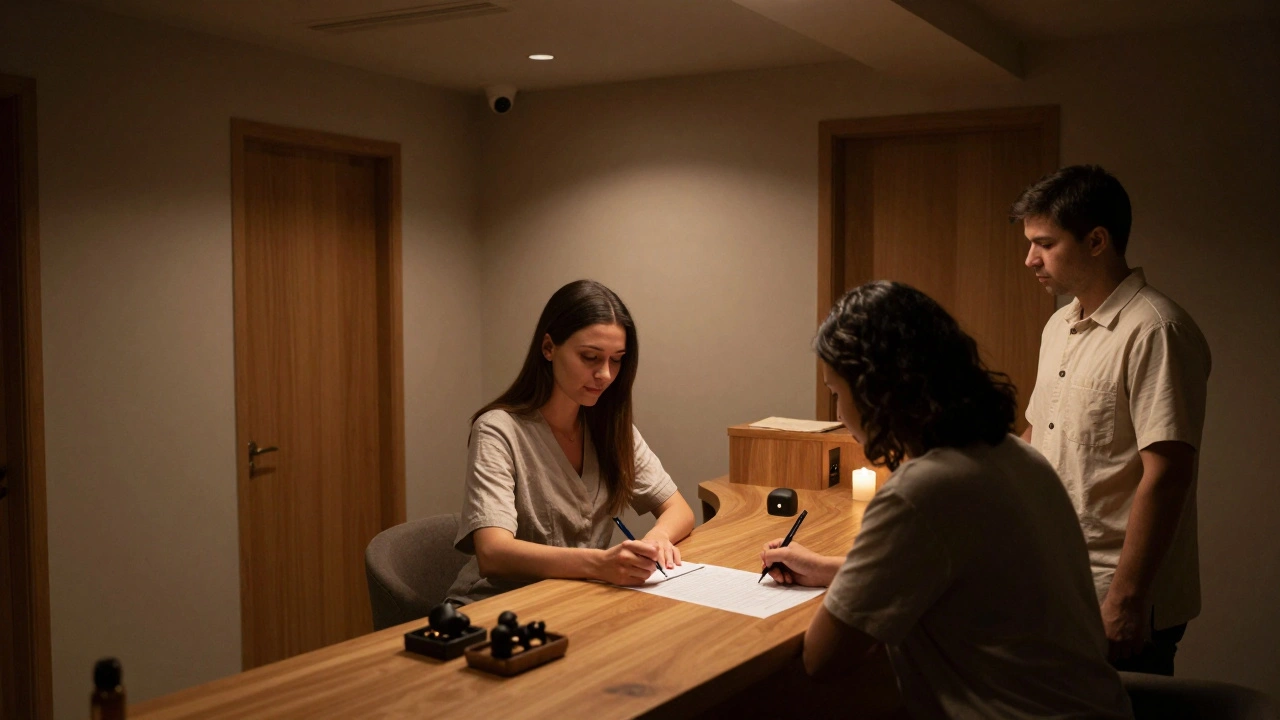
The first layer of safety is physical. A professional tantra salon should have:- A clearly marked entrance with no hidden hallways or back exits
- Security cameras in reception, hallways, and common areas (never in treatment rooms)
- A panic button connected to staff or local security
- Locked storage for personal belongings and payment records
- Lighting that ensures visibility without being harsh or invasive
Client Screening and Consent
You wouldn’t let a stranger into your home without knowing who they are. Why should you do it in a tantra session? Professional salons require:- Government-issued ID verification before the first session
- A pre-session intake form covering medical history, trauma, boundaries, and expectations
- A signed, written consent document that outlines what will and won’t happen
- Clear communication that no sexual contact is part of the session
Staff Training and Boundaries
Practitioners aren’t just therapists. They’re first responders to emotional vulnerability. A good tantra practitioner should be trained in:- Recognizing signs of trauma triggers
- De-escalation techniques for upset or confused clients
- How to handle boundary violations without escalating tension
- When and how to end a session immediately

Data Protection and Privacy
Tantra sessions often involve deep personal disclosures. Clients talk about past abuse, relationship struggles, sexual shame. If that information gets leaked, it can destroy lives. Professional salons should:- Use encrypted, password-protected software for booking and notes
- Never store client names with session details unless absolutely necessary
- Destroy physical notes after 90 days unless legally required to keep them longer
- Never share client information with third parties-not even other practitioners
Insurance and Legal Accountability
Most tantra practitioners work as independent contractors. That means they don’t have employer-backed insurance. But a responsible salon will require practitioners to carry:- Professional liability insurance (minimum €500,000 coverage)
- Public liability insurance for property damage or injury
- Criminal background checks verified by local authorities
Red Flags to Watch For
Here’s what a bad tantra salon looks like:- No website, no contact info, only WhatsApp or Instagram DMs
- Prices that are too low-under AUD $80 for a 90-minute session
- Client reviews that mention "special services" or "extra intimacy"
- Practitioners who don’t have any training credentials listed
- No consent forms, no intake questions, no ID check
- Rooms with no visible exit, no lighting control, no privacy from outside
What You Can Do as a Client
You don’t have to be an expert to stay safe. Here’s your checklist before booking:- Check the salon’s website. Does it have clear policies?
- Look for reviews on independent platforms (Google, Trustpilot), not just Instagram.
- Call or email. Ask: "Do you require ID and consent forms?" If they hesitate, move on.
- Ask about practitioner training. Look for certifications from recognized bodies like the International Tantra Institute or Tantric Healing Association.
- Trust your gut. If something feels rushed, secretive, or pressured, leave.
Where the Industry Is Headed
In 2025, the first professional standards for tantra salons are being drafted in Germany and Australia. They include mandatory safety training, client consent templates, and third-party audits. The Czech Republic is watching closely. This isn’t about policing spirituality. It’s about protecting people who are vulnerable by design. Tantra is about connection, not exploitation. The more professional these spaces become, the more they can fulfill their real promise: healing, presence, and deep human trust.What Practitioners Should Do Now
If you run a tantra salon-or want to start one-here’s your action plan:- Adopt the same security standards as licensed wellness centers
- Require ID and consent forms for every client
- Install cameras in public areas only
- Get professional liability insurance
- Train your staff in de-escalation and trauma awareness
- Use encrypted software for client records
- Document everything. Even if it’s not required, it’s your protection
Are tantra salons legal in the Czech Republic?
Tantra salons exist in a legal gray area. They’re not explicitly illegal, but they’re not officially recognized either. If a salon offers services that resemble sexual activity, it could be classified as a brothel under Czech law, which carries different penalties and requirements. Most reputable tantra salons avoid any physical sexual contact and position themselves as wellness or spiritual practices to stay within legal boundaries.
Do tantra salons have to follow health and safety regulations?
Legally, if they’re operating as a wellness business, they should follow Vyhláška č. 328/2008 Sb., which covers hygiene, ventilation, and sanitation for massage and bodywork services. In practice, many don’t. But clients have the right to ask for proof of compliance. A professional salon will have no problem showing you their records.
Can I report a bad tantra salon?
Yes. If you experience harassment, assault, or a breach of privacy, report it to local police. You can also file a complaint with the Czech Trade Inspection Authority (ČOI) if the salon is operating as a business. Even if the salon isn’t licensed, authorities can investigate for fraud, illegal practices, or violations of public decency laws.
What’s the difference between tantra and erotic massage?
Tantra focuses on energy, breath, and mindful presence-with no sexual release as a goal. Erotic massage is explicitly designed to lead to sexual arousal or orgasm. Legally, this distinction matters. Tantra salons that cross into erotic territory risk being shut down. Practitioners who understand this difference protect themselves and their clients.
Is it safe to book a tantra session online?
It can be-if you use platforms that verify practitioners and require consent documentation. Avoid booking through unverified social media accounts or private messaging apps. Look for salons with professional websites, clear pricing, and verifiable contact information. If they don’t have a phone number or physical address, it’s not safe.
Security in tantra isn’t about fear. It’s about respect. The most powerful sessions happen when both client and practitioner feel completely safe. That doesn’t happen by accident. It’s built-on paper, on policy, and on courage.