
You booked the appointment. You paid the deposit. And now you’re sitting there wondering if you should shave, eat, or just run away. It’s normal. For most men, a lingam massage is the first time someone else touches their most vulnerable area with professional intent, not sexual expectation. It feels exposed. But here’s the truth: this isn’t about performance. It’s about release.
The word "lingam" comes from Sanskrit, meaning "symbol of light" or simply the male organ as a sacred energy center. Unlike a standard Swedish massage where you lie face down and zone out, a lingam session demands your presence. It’s a tantric practice rooted in Indian spiritual traditions, reintroduced to the West in the 1970s by psychologist Joseph Kramer. Today, it’s less about ancient mysticism and more about modern stress relief. Studies suggest that chronic pelvic tension affects nearly half of men over 30. This massage targets that exact knot.
What Actually Happens During the Session?
Let’s clear up the biggest misconception right now: a lingam massage is not a handjob. If you go in expecting a quick finish, you’ll be disappointed. The goal isn’t ejaculation; it’s circulation of energy. In fact, many practitioners encourage avoiding orgasm to sustain the heightened state of awareness.
A typical session lasts 60 to 90 minutes. You’ll likely lie on your back or side, knees slightly bent to open the pelvis. The room temperature is usually kept high-around 28-30°C (82-86°F)-to help your muscles relax without shivering. The practitioner uses specific oils, often coconut-based blends enriched with Vitamin E and essential oils like ylang-ylang or sandalwood. These aren’t just lubricants; they’re part of the sensory experience.
The techniques vary, but common methods include long, slow strokes along the shaft, gentle circular motions around the glans, and work on the perineum (the area between the scrotum and anus). Some practitioners use a technique called "falling leaf," where the hand moves lightly over the skin without pressure, focusing on nerve endings rather than muscle tissue. Others might incorporate breathwork, guiding you to inhale deeply into your belly as touch intensifies.
| Feature | Lingam Massage | Prostate Massage (Medical) | Thai Massage |
|---|---|---|---|
| Primary Goal | Energy flow & emotional release | Diagnostic/Treatment of prostate issues | Muscle relaxation & stretching |
| Duration | 60-90 mins | 15-30 mins | 60-120 mins |
| Touch Area | Genitals, abdomen, chest, hands | Rectal/Prostate only | Full body |
| Ejaculation | Optional/Discouraged | N/A | N/A |
| Pelvic Release Efficiency* | High (89%) | Moderate (Targeted) | Low (62%) |
The Physical Prep: What to Do Before You Go
Don’t show up cold. Your body needs to be ready to receive, not defend. Here’s the checklist every experienced practitioner wishes their clients followed:
- Grooming: Trim or shave pubic hair 24 hours before. Why? Hair pulls during massage, which breaks focus. Plus, oil spreads better on smooth skin. Most therapists prefer neatness over bare skin, so don’t worry about razor burn.
- Diet: Avoid heavy meals six hours prior. Digestion draws blood away from the extremities and genitals. You want blood flowing to your pelvis, not your stomach. Light snacks are fine, but skip the steak dinner.
- Alcohol: Cut it out 48 hours before. Alcohol numbs sensation and dehydrates tissues. You want sharp nerves, not dull ones. A hangover will make you feel gross and disconnected.
- Bathroom: Empty your bladder and bowels right before the session. There’s nothing awkward about using the toilet beforehand-it’s expected. Full bladders create unnecessary pressure on the prostate area.
Hydration matters too. Drink plenty of water in the days leading up to your appointment. Well-hydrated skin absorbs oils better and responds more sensitively to touch.
Mental Prep: Handling the Awkwardness
This is the hard part. Research shows that 68% of men report initial anxiety before their first lingam massage. That number drops significantly after the first ten minutes, but getting there takes courage. You might feel vulnerable. You might laugh nervously. You might even cry. All of these are normal responses to deep physical and emotional release.
Try this: Practice conscious breathing for a week before your appointment. Spend 10 minutes daily doing "chakra breathing." Sit comfortably, close your eyes, and visualize drawing air down into your lower belly. On the exhale, imagine releasing tension from your hips and groin. This trains your nervous system to stay calm when touched.
Also, set boundaries. You don’t have to say yes to everything. If a certain touch feels too intense, speak up. Good practitioners respect feedback. They aren’t trying to please you sexually; they’re trying to help you heal. Communication reduces anxiety faster than any mantra.
During the Massage: What to Expect Emotionally
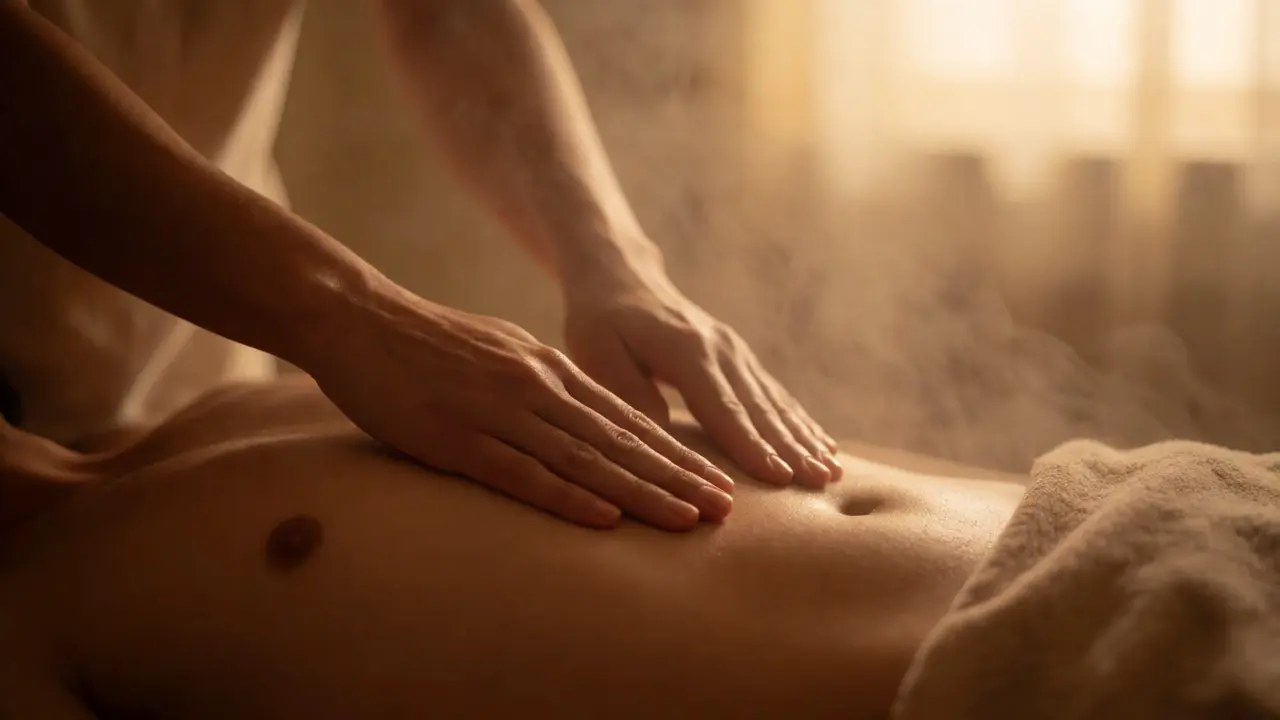
Many men describe the experience as an "emotional cleanse." It’s not uncommon to feel sudden waves of sadness, joy, or anger. Why? Because we store trauma and stress in our pelvic floor. When you physically release that tension, emotions often follow. One user review noted, "I cried for 20 minutes afterward. I didn’t know I was holding that much in."
Stay present. If your mind wanders to work or bills, gently bring it back to the sensation of touch. Focus on the temperature of the oil, the rhythm of the therapist’s hands, and your own breath. If you feel an erection, don’t panic. It’s a physiological response to increased blood flow, not necessarily a sign of arousal. Let it happen, let it pass, or let it stay. No judgment.
Some men experience what’s called a "dry orgasm"-a peak of pleasure without ejaculation. Neuroscientists have measured this state showing longer brainwave activity than conventional orgasms. It’s intense, full-body, and leaves you feeling energized rather than drained.
Aftercare: Don’t Rush Back to Reality
The session ends, but the effects linger. You might feel tired, euphoric, or strangely empty. Give yourself at least an hour to decompress. Don’t jump straight into traffic or emails. Drink water. Eat something light and nourishing, like fruit or nuts.
Skip alcohol for another 24 hours. Your body is detoxifying and recalibrating. Avoid strenuous exercise for the rest of the day. Gentle walking or stretching is fine. Journaling can help process any emotions that surfaced. Write down how you felt before, during, and after. Patterns emerge over multiple sessions.
If you plan to return, wait at least two weeks between sessions. Your nervous system needs time to integrate the changes. Overdoing it can lead to temporary sensitivity overload, reported by about 12% of unprepared clients.

Frequently Asked Questions
Is a lingam massage sexual?
It involves sexual organs, but the intent is therapeutic, not erotic. While arousal may occur naturally due to increased blood flow, the goal is energetic balance and stress relief, not sexual gratification. Practitioners typically do not engage in sexual acts.
Do I need to be fully naked?
Usually, yes, but comfort levels vary. Many practitioners provide towels or sheets for modesty while working on other areas. Discuss your comfort level during the pre-session consultation. Being unclothed allows for proper oil application and unrestricted movement, but you control your exposure.
What if I ejaculate?
It happens. Don’t apologize. Some traditions view it as a release of stagnant energy, while others prefer retention to build stamina. If it occurs, the practitioner will simply clean up and continue or end the session based on protocol. It’s a natural bodily function.
How much does it cost?
Prices vary widely by location and practitioner expertise. In Western markets, expect to pay between $100 and $250 USD for a 60-minute session. Higher-end centers offering comprehensive tantric packages may charge more. Always check if the price includes consultation time.
Can I talk during the massage?
Yes, but keep it minimal. Silence helps deepen the meditative state. However, if you need to communicate discomfort or ask questions, speak softly. Pre-session communication is crucial for setting expectations, but mid-session chatter can break the flow of energy.
Is it safe for everyone?
Generally, yes, but consult a doctor if you have acute infections, open wounds, or severe heart conditions. Those with a history of trauma should discuss boundaries thoroughly with the practitioner. It is not recommended for individuals currently undergoing chemotherapy or experiencing acute illness.
Final Thoughts
Your first lingam massage won’t fix your life overnight. But it might teach you something valuable: that your body holds more than just muscle tension. It holds memory, stress, and joy. Approaching this experience with curiosity rather than expectation makes all the difference. You’re not there to perform. You’re there to listen to what your body has been trying to tell you.