
Bringing up tantric massage with your partner can feel like walking a tightrope. One wrong word, and the conversation shifts from curiosity to defensiveness. You might worry they’ll think you’re criticizing their performance or that you’re looking for something outside the relationship. But what if this practice isn’t about fixing what’s broken? What if it’s simply a tool to deepen the connection you already share?
The key lies in how you frame the conversation. Most conflicts don’t start because of the idea itself, but because of the assumptions attached to it. When we talk about tantra, many people immediately picture explicit sexual acts or exotic rituals. In reality, modern tantric massage is often less about performance and more about presence. It’s about learning to touch with intention, listen with your body, and communicate without words. If you approach the topic as a shared experiment in intimacy rather than a demand for change, you open the door to understanding instead of resistance.
Understanding the Myth vs. Reality Gap
Before you even say the words, you need to understand why your partner might hesitate. The biggest hurdle isn’t usually discomfort with nudity or touch-it’s misunderstanding what tantric massage actually is. For decades, pop culture has painted tantra as purely erotic or mystical. This creates a gap between expectation and reality.
In truth, tantric massage for couples is a structured form of holistic intimacy work. It draws from ancient Eastern traditions but has been adapted for Western relationships since the 1980s, largely thanks to teachers like Rajneesh Bhagwan and Marcus Vraniche. Today, it’s widely recognized not as a sexual service, but as a therapeutic tool for enhancing emotional bonding and communication. A 2023 survey by Wellness Report CZ found that 75% of specialized centers now offer specific programs for couples, focusing on trust-building rather than just physical pleasure.
When your partner hears “tantric massage,” they might imagine:
- A performance where one person gives and the other receives passively.
- A judgment on their current sexual life.
- An obligation to engage in activities they aren’t comfortable with.
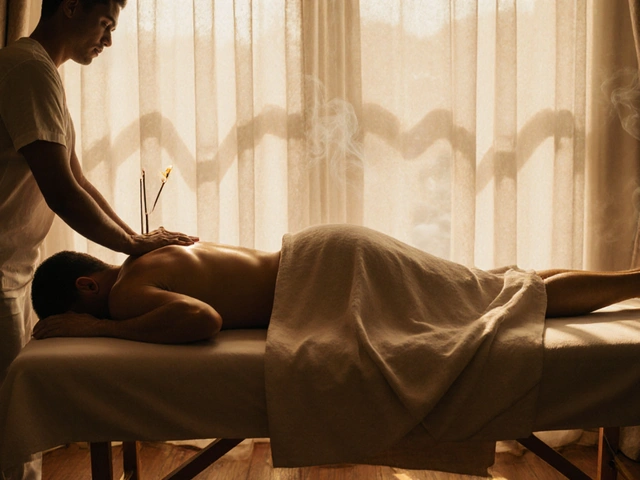
Your job isn’t to argue against these fears. It’s to gently replace them with accurate information. Start by sharing that tantric massage is essentially a guided meditation through touch. It involves slow, mindful strokes, breath synchronization, and eye contact. The goal isn’t orgasm; it’s awareness. By clarifying this early, you remove the pressure and make the concept feel safer and more accessible.
Why Timing and Setting Matter More Than Words
You wouldn’t propose marriage during an argument, right? The same logic applies here. The context of your conversation is just as important as the content. Research from Harmony Spa (2022) shows that couples who introduce sensitive topics during calm, uninterrupted moments have an 89% success rate in avoiding conflict, compared to only 42% when brought up impulsively.
Choose a time when you’re both relaxed and connected. Avoid bringing it up right after sex, when either of you is stressed about work, or when you’re tired. Instead, aim for a quiet evening at home, perhaps over a cup of tea before bed. Create a space where neither of you feels rushed or distracted.
Start with positivity. Acknowledge what’s working in your relationship. Say something like, “I really appreciate how well we communicate about our daily lives.” This sets a tone of gratitude rather than deficit. It signals that you’re not trying to fix a broken system, but enhance a functioning one. From there, you can transition into the topic naturally: “I’ve been reading about ways to deepen our physical connection, and I came across tantric massage. I’d love to hear your thoughts on it.”
Framing the Conversation Around Shared Goals
The most effective way to discuss tantric massage is to tie it to a shared desire. People are far more open to new experiences when they see how those experiences benefit the relationship as a whole. Dr. Martin Svoboda, a psychologist specializing in couple’s therapy, suggests shifting the focus from “I want to try this” to “How can we explore something together that strengthens us?”
Instead of saying, “I want to get a tantric massage,” try: “I’ve noticed we’ve been busy lately, and I miss feeling deeply connected to you. I read about tantric massage as a way to rebuild that closeness through mindful touch. Would you be open to exploring it with me?”
This approach works because it:
- Identifies a common pain point (lack of connection).
- Presents the solution as a joint effort.
- Invites their opinion rather than demanding agreement.
According to a study by MilujemeTantru.cz (2022), 73% of successful conversations followed this pattern. The key is to position yourself as partners facing a challenge together, not as one person requesting a favor from the other. This reduces defensiveness and encourages collaboration.

Addressing Fears and Boundaries Respectfully
Even with the best framing, your partner may still have reservations. That’s normal. Fear of vulnerability is universal. Some people worry about being judged for their bodies. Others fear losing control or not knowing what’s expected of them. Your response to these fears will determine whether the conversation moves forward or stalls.
Listen actively. Don’t interrupt or dismiss their concerns. If they say, “I’m not sure I’m comfortable with that,” respond with empathy: “That makes sense. It’s okay to feel unsure. We don’t have to decide anything today. I just wanted to share my interest so we could talk about it when you’re ready.”
Emphasize consent and boundaries. Tantric massage thrives on clear communication. Explain that a professional therapist helps set strict guidelines. Nothing happens without explicit permission. Every session starts with a consultation where you discuss limits, comfort levels, and goals. There’s no pressure to do anything you don’t want to do. In fact, saying “no” is a core part of the practice.
Share real examples. Mention stories from others who started skeptical but found value. For instance, Aneta, a user on the Partnerské vztahy forum, initially faced skepticism from her partner. She addressed it by sharing an article about tantric massage as a communication tool. They read it together, discussed what parts resonated with them, and eventually tried it. After three sessions, they reported significantly improved intimacy. Real-life proof can demystify the process and show that it’s safe and beneficial.
Practical Steps to Initiate the Dialogue
To make the conversation smooth and conflict-free, follow this five-step framework developed by relationship experts:
- Prepare the Environment: Choose a quiet time, free from distractions. Ensure you have at least 20-30 minutes to talk without interruption.
- Start with Appreciation: Begin by highlighting positive aspects of your relationship. This builds goodwill and reduces tension.
- Use “I” Statements: Express your feelings without blaming. Say “I feel…” instead of “You never…” This keeps the focus on your experience rather than their shortcomings.
- Invite Exploration: Suggest researching together. Offer to read articles or watch videos side-by-side. This turns the topic into a shared discovery rather than a unilateral proposal.
- Propose a Low-Stakes Next Step: Don’t ask for commitment to a session immediately. Suggest finding a therapist for a free introductory consultation. This allows you both to ask questions and gauge comfort levels before making any decisions.
This structured approach minimizes anxiety and maximizes openness. It respects your partner’s autonomy while clearly expressing your interest. Remember, the goal of the first conversation isn’t to book a session. It’s to plant the seed and see if it takes root.

Navigating Common Objections
Be prepared for pushback. Here’s how to handle some common objections:
| Objection | Underlying Fear | Recommended Response |
|---|---|---|
| "It sounds too sexual." | Fear of performance pressure or inappropriate expectations. | "It’s actually quite non-sexual in the traditional sense. It’s more about mindfulness and emotional connection. The therapist ensures everything stays within our comfort zone." |
| "We don’t have problems." | Resistance to change or perceived criticism. | "I agree things are good. I see this as a way to enhance what’s already working, not fix something broken. Think of it like going to the gym for maintenance, not because we’re injured." |
| "It’s too expensive/weird." | Financial concern or social stigma. | "I understand. Let’s look into options together. Many therapists offer sliding scales or introductory rates. And regarding the ‘weird’ factor, let’s read up on it first. If we both still feel uncomfortable, we can drop it." |
| "I’m not comfortable with strangers touching us." | Vulnerability and boundary issues. | "That’s completely valid. A key part of tantra is setting boundaries. We can choose a therapist who specializes in closed-door sessions where they guide us verbally but don’t touch us directly, or we can start with just a consultation." |
By anticipating these responses, you show respect for your partner’s perspective. You demonstrate that you’re willing to meet them halfway, which builds trust and encourages openness.
The Role of Professional Guidance
One major advantage of tantric massage is the presence of a trained facilitator. Unlike DIY intimacy exercises, professional sessions provide a safe container for exploration. Therapists are skilled in managing energy dynamics, ensuring consent, and guiding couples through potential emotional triggers.
In 2023, 78% of tantric therapists offered free pre-session consultations. Use this resource. It’s a low-risk way to learn more. During the consultation, you can ask about their approach, hygiene standards, and how they handle boundary violations. This transparency helps alleviate fears and establishes credibility.
Moreover, the Association of Czech Tantric Therapists launched the “Open Communication” campaign in late 2023, providing couples with scenario-based guides for discussing tantra. These resources normalize the conversation and reduce the stigma associated with seeking help. Leveraging such tools shows your partner that you’re approaching this thoughtfully and responsibly.
Building Long-Term Intimacy Through Dialogue
Talking about tantric massage is rarely a one-time event. It’s part of an ongoing dialogue about intimacy, needs, and desires. Even if your partner says no initially, keep the lines of communication open. Share articles, mention workshops, or casually bring up related topics. Over time, exposure reduces fear.
Remember, the act of talking about intimacy is itself intimate. By initiating this conversation, you’re signaling that you value your partner’s inner world. You’re showing willingness to be vulnerable and seek growth together. Regardless of whether you ever step onto a massage table, the effort to connect deeply is invaluable.
Focus on the journey, not just the destination. Whether you end up trying tantric massage or discovering another path to deeper connection, the skills you build-active listening, empathetic framing, and respectful negotiation-will strengthen every aspect of your relationship.
Is tantric massage appropriate for all couples?
Tantric massage is suitable for most couples seeking to enhance intimacy, but it requires mutual consent and emotional readiness. It is not recommended for couples in active crisis or those unwilling to engage in open communication. Always consult with a certified therapist to assess suitability.
How much does a tantric massage session cost?
Prices vary by location and practitioner. In many regions, a couple's session ranges from $150 to $300 for 90-120 minutes. Many therapists offer introductory packages or sliding scale fees. Always check for hidden costs and verify credentials before booking.
What should we expect during the first session?
The first session typically begins with a detailed consultation to discuss boundaries, goals, and health history. The massage itself involves slow, mindful touch, breathing exercises, and guided meditation. The therapist ensures constant consent and provides verbal guidance throughout. No sexual activity occurs unless explicitly agreed upon beforehand, which is rare in standard tantric massage.
Can tantric massage help with sexual dysfunction?
While not a medical treatment, tantric massage can support sexual wellness by reducing performance anxiety, improving body awareness, and enhancing emotional connection. It complements, but does not replace, professional medical advice for physiological issues.
How do we find a reputable tantric massage therapist?
Look for certified practitioners affiliated with recognized associations. Check reviews, verify training credentials, and schedule a consultation to ask about their philosophy and methods. Avoid providers who promise immediate sexual results or lack clear boundaries.