
Most people think of Tantra as something purely sexual. It’s a common misconception, fueled by pop culture and commercialized spas that use the word as a marketing buzzword. But if you dig into the actual roots, you’ll find a completely different story. Tantra is an ancient Indian system of meditation and rituals that dates back to before the 5th century BCE. The word itself comes from Sanskrit, meaning "loom" or "weave." Think about that for a second. It’s not about sex; it’s about weaving together the physical, mental, and spiritual aspects of your life into one cohesive whole.
When we talk about Tantric Massage in a therapeutic context, we aren’t talking about a quick fix for muscle tension or a way to get off. We’re talking about a structured ritual designed to harmonize your inner energy. This article breaks down what this philosophy actually means, how it translates to touch, and why more people are seeking it out in 2026 despite the noise in the industry.
The Core Philosophy: More Than Just Touch
To understand the massage, you have to understand the mindset. Traditional Tantra views the physical body as a temple for the soul. It doesn’t separate your emotions from your muscles. If you’re holding stress in your shoulders, Tantra says that’s not just a tight trapezius; it’s likely an emotional blockage too.
This approach splits into three main interpretations today:
- Traditional: Rooted in ancient Hindu and Buddhist texts, focusing on spiritual liberation.
Scholastic: A more academic study of the texts and history. - Western/Modern: Adapted for contemporary wellness, often blending Taoist principles with classical massage techniques.
In the Western wellness space, which is where most clients encounter it, the goal is simple: presence. The philosophy teaches you to disconnect from expectations and live in the moment-here and now. When you apply this to massage, the therapist isn’t trying to "fix" you. They are creating a safe container for you to release suppressed emotions and reconnect with your own energy.
How Tantric Massage Differs From Classical Massage
If you’ve had a deep tissue massage, you know the drill. The therapist digs into your knots, works on your fascia, and leaves you feeling physically looser. That’s great for sports recovery. But Tantric Massage operates on a different frequency.
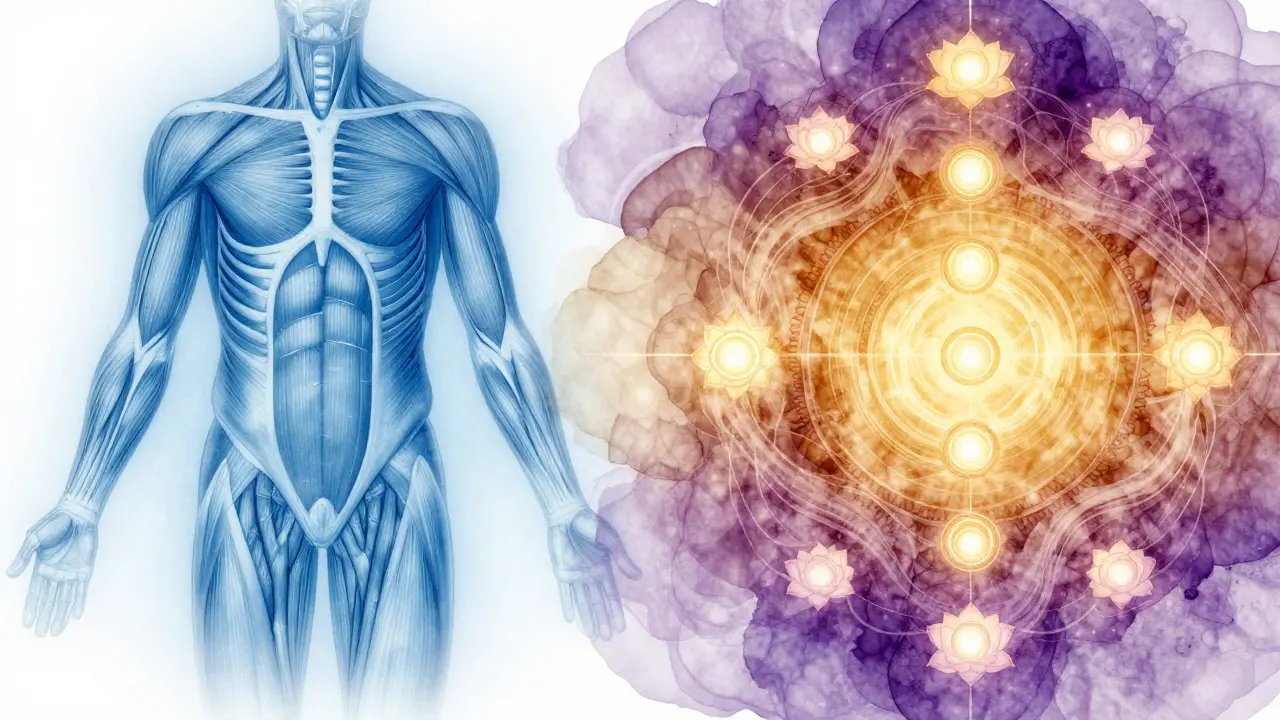
Classical massage focuses on anatomy. Tantric massage focuses on energy. Eastern philosophy teaches that our bodies have seven energy centers, known as Chakras. Each chakra influences different parts of your life, from basic survival instincts to higher consciousness. A tantric session moves along these energetic lines rather than just muscle groups.
| Feature | Classical Massage | Tantric Massage |
|---|---|---|
| Primary Goal | Muscle relief and physical relaxation | Energy harmonization and emotional release |
| Technique Focus | Kneading, friction, pressure points | Breathwork, gentle strokes, energy flow |
| Client Role | Passive recipient | Active participant in awareness |
| Duration | Typically 60 minutes | Typically 90-120 minutes |
| Outcome | Physical flexibility and reduced pain | Emotional stability and mind-body connection |
One key difference is the structure. In a classical massage, you might ask the therapist to focus on your lower back. In a tantric session, the flow is predetermined to create a meaningful arc. You can’t steer the ship mid-journey because the journey is about surrendering control, not directing it. However, boundaries are always discussed beforehand. If certain areas feel unsafe, they are skipped. The integrity of the client’s comfort is paramount.
The Ritual: Tools, Atmosphere, and Structure
You don’t just walk into a room and start rubbing oil. Tantric massage is a ritual. The environment matters as much as the touch. Historically, these rituals took place in temples dedicated to the Goddess of Love, emphasizing sacredness over sensuality.
A standard session lasts between 90 and 120 minutes. Why so long? Because you need time to slow down. The nervous system has to shift from "fight or flight" to "rest and digest." Rushing this process defeats the purpose.
Here is what typically happens during a session:
- Consultation: Before touching you, the therapist talks to you. They discuss your expectations, your boundaries, and any trauma triggers. This builds trust.
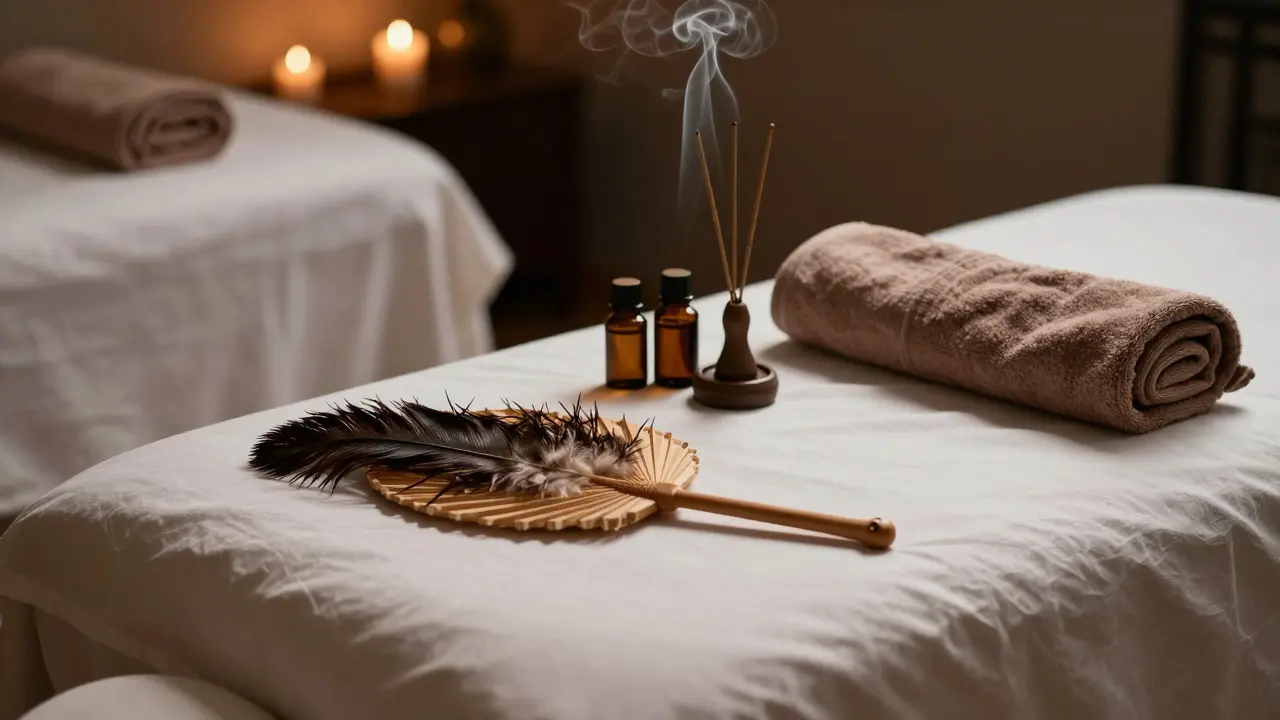
- Preparation: The room is dimly lit, with calming music playing. Essential oils are warmed. Tools like ostrich feathers, fans, and warm towels are prepared.
- Breathwork: The session often starts with guided breathing exercises. This helps you ground yourself and prepare your mind for the experience.
- The Flow: The therapist uses a variety of touches. Some are feather-light, barely grazing the skin to stimulate nerve endings. Others are deeper, but always fluid. They may use tools like feathers to trace energy pathways without direct pressure.
- Closing: The session ends gently, allowing you to reorient yourself slowly. Jumping up immediately can cause dizziness or emotional overwhelm.
The use of specific tools isn’t just for show. Ostrich feathers, for example, provide a sensation that is distinct from human hands. It forces the brain to pay attention to subtle stimuli, heightening sensory awareness. Warm towels help relax the muscles and open pores, allowing essential oils to penetrate deeper.
Addressing Misconceptions: Sex vs. Spirit
Let’s address the elephant in the room. Does tantric massage involve sexual acts? The short answer is no, not in a professional therapeutic setting. However, it does involve working with the genital area, referred to in Tantra as the Lingam (male) and Yoni (female).
This is where confusion arises. In traditional Tantra, these areas are seen as powerful energy centers, not just reproductive organs. Massaging them is done with reverence and clinical detachment, similar to how a physiotherapist treats any other part of the body. The goal is to release stored sexual energy and transform it into creative or spiritual vitality.
Some modern interpretations claim that tantric massage can lead to full-body orgasms. While some clients report intense waves of pleasure, describing it as a "deep ocean" of sensation, the primary aim isn’t orgasm. It’s expansion. It’s about learning that pleasure isn’t localized to one spot but can be felt throughout the entire nervous system.
Be wary of places that market "tantric massage" as a euphemism for erotic services. Authentic practitioners adhere to strict ethical codes. If a provider promises sexual gratification, they are not practicing Tantra; they are providing escort services. The distinction is crucial for both safety and the intended therapeutic outcome.
Finding a Qualified Practitioner
This is the hardest part for beginners. The market is flooded with unqualified individuals using the term "Tantric" to charge premium prices. There is no single global governing body for Tantric massage, which makes vetting difficult.
However, standards are improving. In regions like the Czech Republic, organizations like the Czech Association of Tantric Therapists are pushing for certification standards. By late 2025, new guidelines were proposed requiring minimums of 200 hours of theoretical education in Tantric philosophy and 150 hours of supervised practical training.
When looking for a therapist, ask these questions:
- What is your training background?
- Do you follow a specific lineage or school of Tantra?
- How do you handle boundaries and consent?
- Is the session focused on energy work or physical pleasure?
A qualified therapist will welcome these questions. They will explain their philosophy clearly and make you feel safe. Red flags include vague answers, pressure to book multiple sessions upfront, or any hint of inappropriate behavior during the consultation.
The Benefits: What Can You Expect?
So, why go through all this? If you’re dealing with chronic stress, anxiety, or a disconnection from your body, Tantric massage can offer profound shifts. It’s not a cure-all, but it is a powerful tool for integration.
Clients often report:
- Emotional Release: Crying during a session is common. It’s the body letting go of old traumas that were stuck in the tissues.
- Improved Body Awareness: You learn to listen to your body’s signals more accurately.
- Reduced Anxiety: The breathwork and parasympathetic activation calm the nervous system.
- Deeper Relationships: By understanding your own energy, you often become more present and empathetic with partners.
Scientific interest is also growing. In 2023, Charles University in Prague launched a pilot study on the effects of Tantric massage on emotional regulation. While results are still being analyzed, early indicators suggest significant improvements in psychological well-being. This kind of research helps legitimize the practice beyond the realm of alternative medicine.
Conclusion: A Journey Inward
Tantric massage isn’t for everyone. It requires vulnerability, patience, and a willingness to look inward. If you’re looking for a quick rubdown after a gym session, stick to sports massage. But if you feel disconnected, stressed, or curious about the deeper layers of your own existence, Tantra offers a path.
Remember, the philosophy is about weaving. It’s about connecting the dots between your thoughts, your feelings, and your physical form. When done correctly, by a skilled and ethical practitioner, it can be one of the most transformative experiences you’ll ever have. Do your research, trust your instincts, and approach it with an open mind.
Is Tantric massage the same as erotic massage?
No. Erotic massage is focused on sexual gratification and often involves explicit sexual acts. Tantric massage is a therapeutic practice focused on energy healing, emotional release, and mind-body connection. While it may involve sensual touch, the goal is spiritual and psychological well-being, not sexual climax.
How long does a typical Tantric massage session last?
A standard Tantric massage session usually lasts between 90 and 120 minutes. This duration allows enough time for proper preparation, breathwork, the main energy work, and a gentle closing period to ensure the client feels grounded afterward.
What should I wear to a Tantric massage?
Comfort is key. Most therapists recommend wearing loose, comfortable clothing that you can easily remove or adjust. Some sessions may require you to be partially or fully unclothed, depending on the specific technique and your comfort level, but this is always discussed in advance.
Can Tantric massage help with trauma?
It can be helpful for some people, as it encourages the release of stored emotional tension. However, if you have severe trauma or PTSD, it is crucial to work with a therapist who has specific training in trauma-informed care. Always disclose your history during the initial consultation.
How do I find a certified Tantric massage therapist?
Look for practitioners affiliated with recognized associations, such as the Czech Association of Tantric Therapists or similar bodies in your region. Ask about their training hours, supervision, and adherence to ethical codes. Avoid providers who promise sexual services or lack clear credentials.