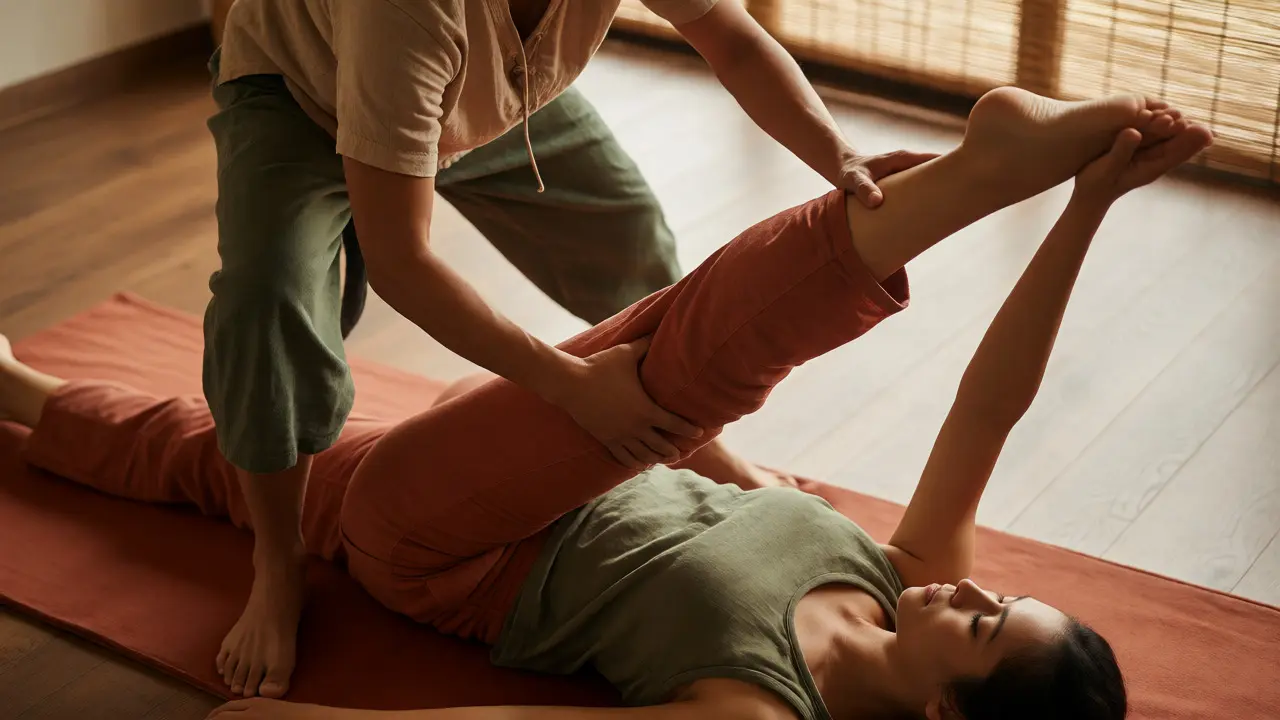
You’re lying on a mat, eyes closed, wondering what’s about to happen to your body. Is it going to be a deep, rhythmic stretch that cracks your spine like a knuckle? Or is it going to be a slow, feather-light dance that makes you feel every nerve ending in your skin? This is the exact confusion many people face when choosing between Tantric Massage and Thai Yoga Massage. They sound similar because both promise relaxation and healing, but their approach to movement and stretching is worlds apart.
If you’ve ever tried one and wondered why the other feels so different, you’re not alone. One treats your body like a machine that needs tuning; the other treats it like an energy field that needs awakening. Let’s break down exactly how these two ancient practices handle motion, so you can pick the right one for your current state of mind and body.
The Core Difference: Active Manipulation vs. Passive Awareness
Here’s the simplest way to understand the divide: Thai Yoga Massage is active manipulation, while Tantric Massage is passive awareness. In Thai Yoga Massage, often called Nuad Bo-Rarn, the practitioner is essentially doing yoga *for* you. You are the recipient of physical forces-pulls, pushes, and stretches. The therapist uses their hands, elbows, knees, and feet to guide your limbs into positions that mimic yoga asanas. It’s structured, repetitive, and deeply physical.
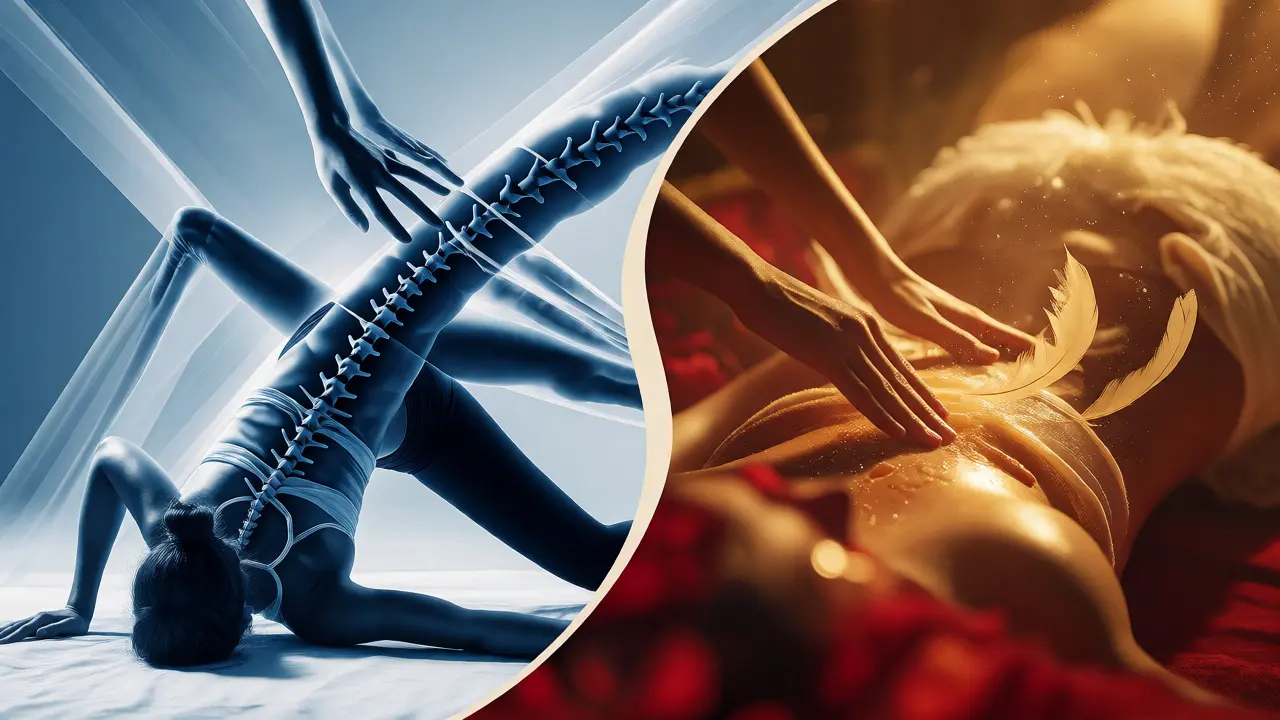
In contrast, Tantric Massage rarely involves forcing your body into shapes. Instead, it focuses on the flow of sensation. The therapist might move slowly over your skin with various textures-feathers, warm towels, or just their fingertips-but they aren’t trying to lengthen your hamstrings. They are trying to heighten your sensitivity. If Thai Yoga Massage is a workout for your flexibility, Tantric Massage is a meditation for your nervous system.
How Thai Yoga Massage Handles Stretching
Thai Yoga Massage has roots going back over 2,500 years, blending Indian Ayurveda, Chinese acupuncture, and Buddhist medicine. It was standardized in Thailand in the mid-20th century and is now recognized by UNESCO as part of the cultural heritage of humanity. The technique relies heavily on Sen lines, which are energetic pathways similar to meridians in Traditional Chinese Medicine.
During a typical 90-minute session, you’ll experience about 15 to 20 distinct stretches. These aren’t random pulls; they follow a specific sequence designed to open up joints and release tension along these Sen lines. Think of it as assisted yoga. The therapist might pull your leg overhead while pressing on a pressure point near your hip, or twist your torso while stabilizing your shoulders. Because this happens through clothing (usually loose pajamas) without oil, the friction allows for deeper leverage.
Research from Chulalongkorn University in Thailand showed that regular sessions improved joint flexibility by nearly 28% after just four weeks. That’s significant if you sit at a desk all day. The movement here is purposeful and mechanical. You will feel physically altered-looser, taller, more aligned-immediately after the session.
How Tantric Massage Uses Movement
Tantric Massage comes from a different lineage entirely. While its philosophical roots trace back to 5th-century India, the modern version we see in wellness centers today evolved in the West during the 20th century. It’s less about anatomy and more about psychology and energy.
In a Tantric session, which usually lasts 120 to 150 minutes, movement is subtle. There is no fixed routine of stretches. A certified therapist, like those trained under recent certification standards in Europe, adapts the touch based on your reactions. They might use long, sweeping strokes with a silk cloth, then switch to light tapping with fingertips. The goal isn’t to change your range of motion but to change your relationship with sensation.
A study highlighted in integrative medicine journals noted that only about 12% of tantric sessions include formal stretching. The rest is static work or micro-movements. For example, the therapist might hover their hand slightly above your skin, letting you feel the warmth without contact, creating a sense of anticipation and presence. This lack of forced movement allows emotional blocks to surface. Many clients report crying or laughing unexpectedly-not because their muscles were stretched, but because pent-up emotions were released through gentle, conscious touch.

Comparing the Physical Experience
To help you decide, let’s look at the practical differences side-by-side. This table breaks down what actually happens to your body during each treatment.
| Feature | Thai Yoga Massage | Tantric Massage |
|---|---|---|
| Primary Goal | Physical flexibility and pain relief | Emotional release and sensory awareness |
| Type of Movement | Active, assisted yoga poses | Passive, varied tactile stimulation |
| Stretching Intensity | High (full range of motion) | Low (minimal to none) |
| Structure | Standardized sequence (108 moves) | Intuitive and adaptive |
| Attire | Loose clothing, no oil | Nude or semi-nude, often with oils |
| Best For | Stiff backs, athletes, desk workers | Stress, trauma recovery, intimacy issues |
Notice the attire difference. Thai massage requires clothes because the therapist uses their body weight to press and stretch you. Tantric massage often involves nudity or minimal clothing because the focus is on direct skin-to-skin connection and the flow of energy across the entire body, including areas covered by clothes in Thai practice.
Who Should Choose Which?
Picking the wrong one can lead to disappointment. If you go into a Tantric Massage expecting a deep tissue crack, you’ll feel cheated. If you go into Thai Yoga Massage hoping for a spiritual journey, you might find it too mechanical.
Choose Thai Yoga Massage if:
- You have chronic back pain, stiff necks, or limited mobility.
- You want a tangible physical result, like being able to touch your toes again.
- You prefer a structured, predictable process where you know what’s coming next.
- You are uncomfortable with nudity or intense emotional vulnerability.
Choose Tantric Massage if:
- You feel emotionally numb or disconnected from your body.
- You are dealing with stress, anxiety, or past trauma that manifests as tension.
- You want to explore sensuality and deepen your capacity for pleasure.
- You are comfortable with silence, stillness, and potentially non-traditional therapeutic boundaries.
It’s worth noting that some centers now offer fusion styles. A "Tantra-Thai" session might start with Thai stretches to loosen the body, followed by Tantric touch to calm the mind. This hybrid approach works well for people who want both physical relief and mental clarity but don’t want to commit to two separate appointments.
Common Pitfalls and Misconceptions
One major misconception is that Tantric Massage is always sexual. While it explores sensuality, professional practitioners emphasize ethics and therapy. As Dr. Petr Vávra from Prague’s Sports Medicine Clinic notes, Thai massage is clearly defined by its medical benefits, whereas Tantric work is more holistic. However, because Tantric Massage lacks the rigid standardization of Thai methods (which require 250 hours of training), quality varies wildly. Always check credentials. Look for therapists certified by recognized bodies, such as the Czech Association of Tantric Therapists or equivalent international groups.
Another pitfall is expecting immediate physical flexibility gains from Tantric work. Studies show that while 92% of Thai massage clients report improved flexibility, only 27% of Tantric clients notice physical changes. But flip the script: 78% of Tantric clients report significant emotional release, compared to just 34% for Thai massage. Your definition of "success" determines which massage serves you best.
Final Thoughts on Choosing Your Path
There is no superior massage; there is only the right tool for the job. If your body feels like a rusty gate that needs oiling and swinging wide, book the Thai Yoga Massage. If your mind feels cluttered and your skin feels distant, book the Tantric Massage. Listen to what your body is asking for today. Do you need to be moved, or do you need to be felt?
Does Thai Yoga Massage hurt?
It shouldn't be painful, but it can be intense. You should feel a "good hurt" or deep pressure, especially during stretches. If it hurts sharply, tell your therapist immediately. Communication is key to adjusting the intensity.
Is Tantric Massage always erotic?
No. While it involves sensual touch and often nudity, the primary goal is therapeutic and meditative. Professional sessions focus on energy flow and emotional release rather than sexual gratification. Boundaries are discussed beforehand.
Can I combine both massages?
Yes, many spas offer fusion treatments. You can also alternate them-using Thai Yoga Massage for weekly physical maintenance and Tantric Massage monthly for emotional reset.
Which massage is better for back pain?
Thai Yoga Massage is generally more effective for structural back pain due to its focus on spinal alignment and muscle stretching. Tantric Massage may help if the pain is psychosomatic or stress-related.
Do I need to be flexible to get a Thai Yoga Massage?
No. The therapist does the stretching for you. They adapt the poses to your current flexibility level. In fact, it's often recommended for people who are *not* flexible.