Tantric Breathing Guide
The 4-2-6 Breathing Technique
Practice this simple pattern to activate your body's natural relaxation response. Inhale slowly through your nose for 4 seconds, hold for 2 seconds, and exhale gently through your mouth for 6 seconds. Repeat 3-5 times to deepen your experience.
Most people think of massage as something that loosens tight muscles. But tantric massage isn’t about kneading away soreness. It’s about waking up your whole body-through breath.
If you’ve ever tried tantric massage and felt confused, it’s probably because no one told you the real secret: oxygen is the engine. Not the hands. Not the oil. Not even the touch. It’s how you breathe.
Without conscious breathing, tantric massage becomes just another body rub. With it, you unlock sensations most people never feel: waves of warmth spreading from your pelvis to your chest, tingling in your fingertips, a deep calm that lingers for hours after. This isn’t magic. It’s biology.
Why Breathing Changes Everything
When you’re stressed, your breathing gets shallow. You take quick, high chest breaths-just enough to stay alive, not enough to feel alive. That’s normal in modern life. But tantric massage flips this. It asks you to breathe like you’re underwater, slowly filling every inch of your body with air.
Studies in psychosomatic medicine show that slow, diaphragmatic breathing activates the parasympathetic nervous system. That’s the part of your body that says, “It’s safe to relax.” When this kicks in, your heart rate drops, your muscles soften, and your mind stops racing. In tantric massage, this isn’t a side effect-it’s the goal.
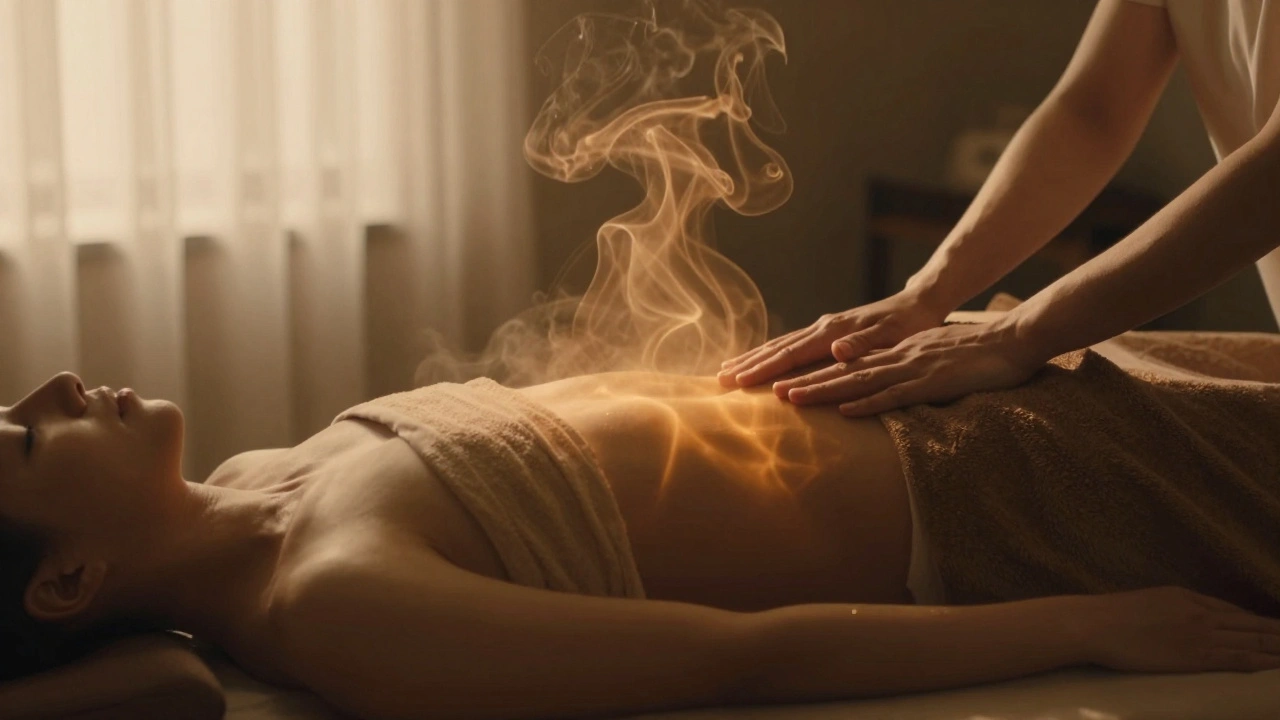
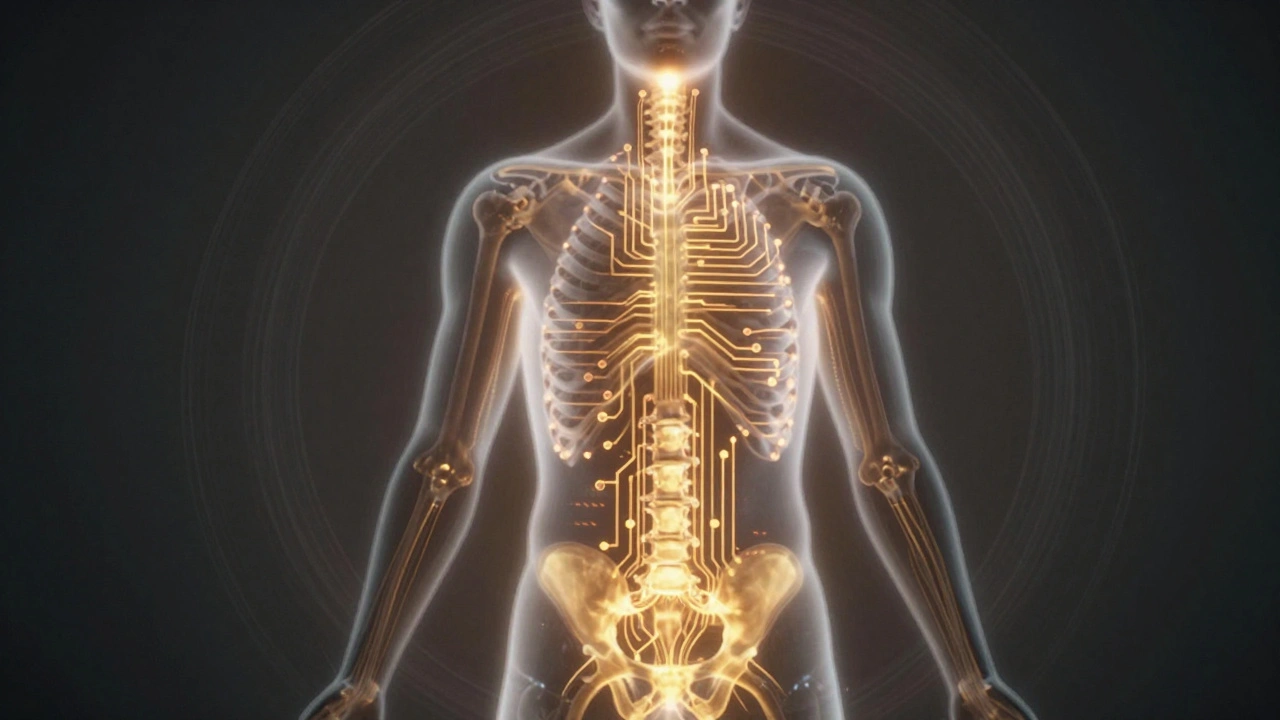
Think of your body as a circuit. Touch is the wire. Breath is the current. Without electricity, the wire does nothing. Without breath, the touch stays on the surface. But when you breathe deep into your belly, then your pelvis, then your ribs, then your throat, you’re not just inhaling air. You’re turning your body into a conductor for energy.
How Tantric Breathing Actually Works
There’s no single “correct” way to breathe during tantric massage-but there are patterns that work every time.
Start with this: inhale through your nose for a count of four. Let the air sink down past your ribs, into your lower belly. Feel your pelvis expand slightly. Hold for two counts. Then exhale through your mouth for six counts, letting go of tension like you’re sighing out a heavy weight. Repeat.
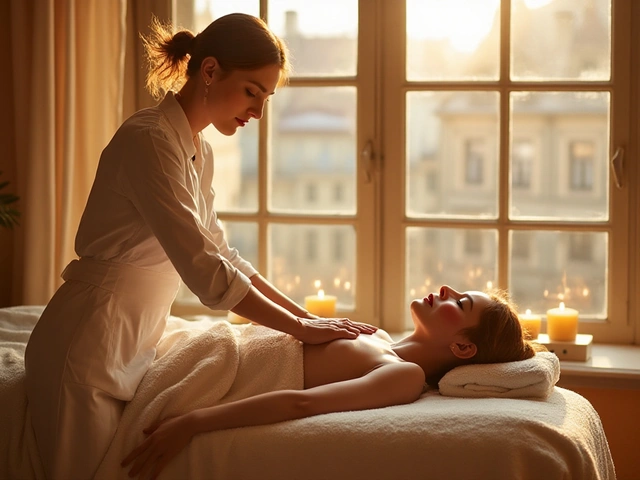
This isn’t yoga. You’re not trying to “control” your breath. You’re letting it guide you. The masseuse might place a hand on your lower back or hip. As they press gently, you breathe into that spot. You don’t push. You don’t force. You just let the air flow where the touch is.
Some practitioners describe it as breathing “into the trychtýř”-a funnel above your head. It sounds strange, but it’s about expanding your awareness beyond your skin. You’re not just feeling the massage-you’re feeling the space around you, the air between you and the person touching you.
When two people breathe in sync-partner, masseuse, or even just yourself in a quiet room-their nervous systems begin to align. Heart rates slow together. Brainwaves shift. That’s why people say, “I felt connected, even though we didn’t speak.” It’s not mystical. It’s physiological.
What Oxygen Does to Your Body During the Massage
Let’s get technical, but simple.
Oxygen doesn’t just keep your cells alive. It’s the fuel for nitric oxide production-a molecule that relaxes blood vessels. More oxygen means better circulation. Better circulation means more warmth, more sensitivity, more pleasure.
When you breathe deeply during tantric massage, you’re increasing blood flow to your pelvic region, your spine, your skin. That’s why people report feeling “tingles” in areas they didn’t even know were sensitive. It’s not the touch alone. It’s the oxygen making those nerves more responsive.
And here’s the kicker: deep breathing lowers cortisol-the stress hormone. Lower cortisol means less fear, less inhibition, more openness. That’s why tantric massage often brings up emotions. Not because it’s “healing trauma,” but because your body finally has the oxygen it needs to let go of old tension. You’re not being “released.” You’re being reconnected.
Some people experience full-body orgasms. Others feel waves of warmth without any genital stimulation. Both are real. Both happen when oxygen flows where it’s been blocked-for years, sometimes decades-by stress, shame, or just forgetting how to breathe.
What Tantric Breathing Is Not
It’s not hyperventilation. It’s not forceful belly pumping. It’s not about “chasing energy.”
Some schools teach visualizations-imagining light, colors, Kundalini rising. These can help, but they’re not necessary. The real work is simpler: slow, soft, continuous breath.
And it’s not about sex. Tantric massage is often misunderstood as erotic. It’s not. It’s about presence. About feeling your skin, your breath, your heartbeat. If you’re focused on arousal, you’re missing the point. The pleasure comes later, as a side effect of deep relaxation.
Also, it’s not passive. You can’t just lie there and wait for magic. You have to breathe. You have to notice. You have to say “slower” or “softer” if something feels off. That’s part of the practice.
What Happens If You Don’t Breathe
Many people walk into tantric massage expecting a relaxing bodywork session. They lie down. The masseuse starts. They tense up. They hold their breath. And then they wonder why they didn’t feel anything.
That’s the most common mistake. You can have the best masseuse in the world, the softest oil, the perfect room-but if you’re holding your breath, you’re blocking the entire process.
Without oxygen, your body stays in survival mode. Muscles stay tight. Nerves stay on alert. Energy stays stuck. You might feel gentle touch, but you won’t feel transformation.
That’s why serious practitioners always start with a breathing lesson. Not as a warm-up. As the foundation. They’ll say: “Breathe with me.” And they’ll match their rhythm to yours. That’s when the real work begins.
How to Practice Tantric Breathing at Home
You don’t need a masseuse to start. You just need five minutes a day.
- Find a quiet space. Lie on your back. Put one hand on your belly, one on your chest.
- Inhale through your nose for four seconds. Feel your belly rise. Your chest should barely move.
- Hold for two seconds.
- Exhale through your mouth for six seconds. Let your belly sink.
- Repeat for five minutes.
Do this daily for two weeks. Notice how your body feels when you wake up. Notice how you react to stress. You’ll start breathing deeper without thinking about it.
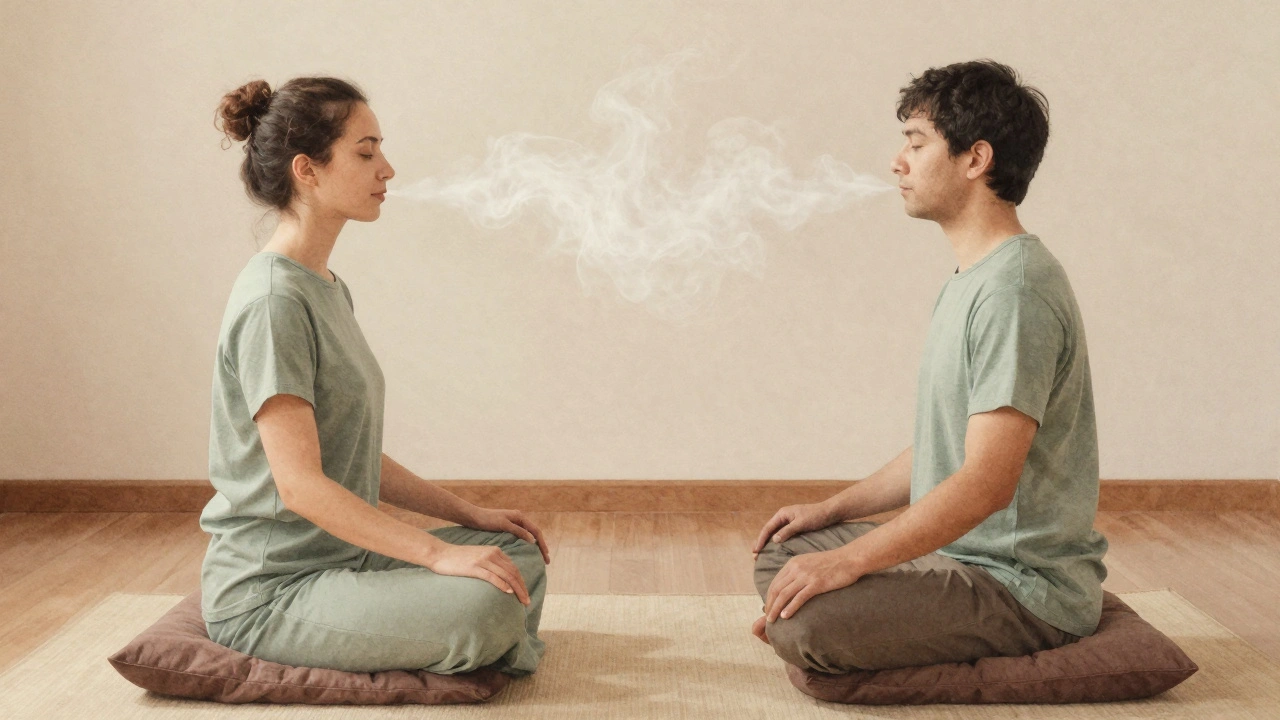
Then, try it with a partner. Sit facing each other. Breathe together. Don’t talk. Just match your rhythm. After five minutes, you’ll feel a quiet connection-not sexual, not emotional, just… there. Like you’re sharing the same air.
This is the real gift of tantric breathing: it teaches you how to be present. Not with someone else. With yourself.
The Bigger Picture: Why This Matters Now
We live in a world that rewards speed. We scroll. We multitask. We numb out. We forget how to feel.
Tantric massage with conscious breathing is a rebellion. It says: Slow down. Feel your body. Breathe like you mean it.
In 2025, more people are turning to this-not because it’s trendy, but because it works. It doesn’t promise enlightenment. It doesn’t sell you a cure. It just gives you back your breath. And with it, your body’s natural ability to heal, relax, and feel pleasure.
It’s not about sex. It’s not about spirituality. It’s about oxygen. Simple, ancient, powerful.
If you’ve ever wondered why you feel more alive after a tantric massage than after a vacation-it’s because you finally breathed.