Sexual aversion isn’t just about not wanting sex. It’s a deep, often overwhelming sense of fear, disgust, or panic that shows up when intimacy is even mentioned. For some, it starts after trauma. For others, it creeps in slowly-through shame, pressure, or years of disconnected relationships. The body shuts down. Touch feels dangerous. Even thinking about intimacy can trigger anxiety, nausea, or numbness. According to the Czech Society of Sexology (2023), around 8.7% of the population experiences this, with women affected at more than double the rate of men. If you’re one of them, you’re not broken. You’re not alone. And there’s a path forward that doesn’t start with a diagnosis or a pill.
What Sexual Aversion Really Feels Like
It’s not laziness. It’s not being "cold" or "uninterested." Sexual aversion is a survival response. Your nervous system has learned that intimacy = threat. That’s not a choice. It’s biology. You might avoid cuddling, dread being touched, or feel panic when a partner gets close. Some people can’t even tolerate wearing underwear. Others freeze during foreplay. The emotional weight is heavy-guilt, shame, isolation. You wonder if you’ll ever feel pleasure again.
Unlike low libido, where desire is simply absent, aversion is active resistance. The body tenses. Breath stops. Eyes dart away. It’s not about attraction-it’s about safety. And that’s where tantric massage steps in-not as a fix, but as a bridge back to your own skin.
Tantric Massage Is Not What You Think
Let’s clear this up right away: tantric massage is not erotic service. It’s not about orgasm. It’s not even really about sex. It’s about relearning how to be in your body without fear.
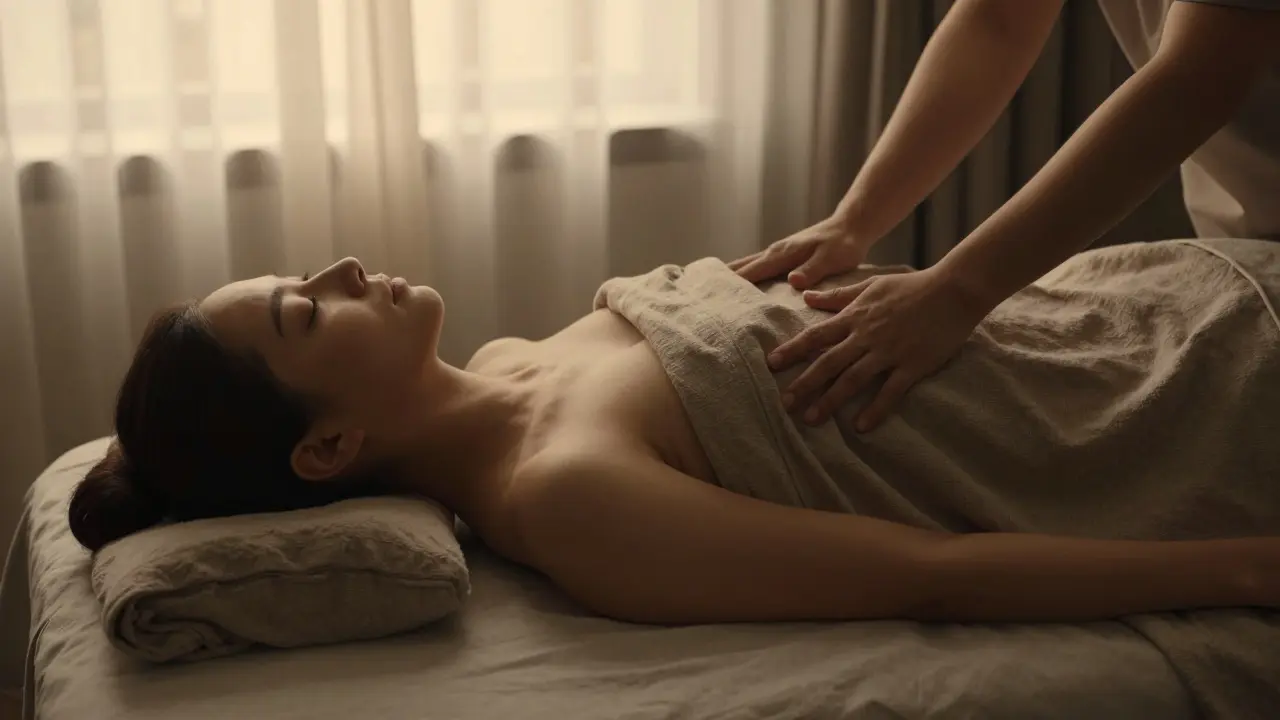
Rooted in ancient Indian and Tibetan traditions, tantric practice has long focused on energy, breath, and presence. Modern tantric massage, as developed in the Czech Republic by Deniska Říha Palečková since 2005, strips away the mysticism and keeps the core: slow, intentional touch that helps the nervous system reset. A typical session lasts 150 to 180 minutes. It begins with a quiet conversation-no pressure, no expectations. Then comes breathwork, gentle full-body massage, and finally, slow work on intimate areas… but only if the client is ready.
There’s no penetration. No nudity unless the client chooses it. No demands. Just presence. The therapist moves at 2-3 centimeters per second. Their touch is light, warm, and consistent-like a slow wave washing over the skin. This rhythm triggers the parasympathetic nervous system-the part of your body that says, "It’s safe to relax." A pilot study from Rehabilitace.info (2023) showed cortisol levels dropped by 27% after just one session. Oxytocin, the bonding hormone, rose by 18%.
How It Works for Sexual Aversion
The goal isn’t to make you horny. It’s to make you feel safe enough to feel.
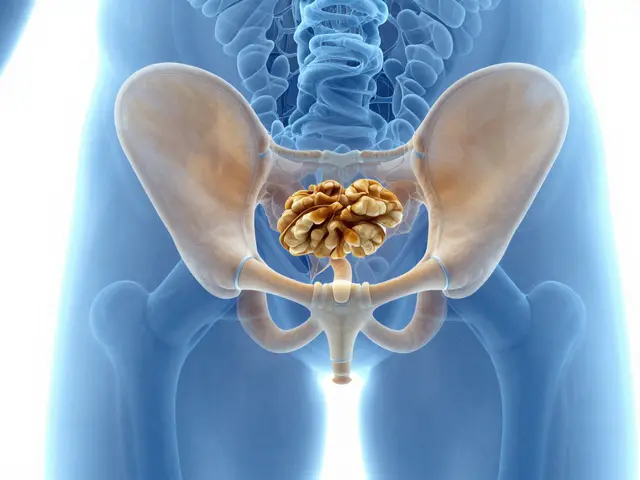
Sexual aversion often lives in the pelvis. That’s where trauma gets stored. When you’ve been violated, abused, or shamed, your pelvic floor tightens like a clenched fist. Over time, it forgets how to release. Tantric massage doesn’t force it open. It whispers to it.
For women, this might mean gentle, non-penetrative work on the vulva-just enough pressure to notice sensation without triggering panic. For men, it’s slow, mindful strokes along the shaft and perineum, never rushing, never demanding a response. These techniques, known as yoni healing and lingam massage, have been shown in studies by Thajská Masáže Bymio (2024) to increase genital sensitivity by up to 40% after six sessions. But the real change? It’s not physical. It’s emotional.
People with sexual aversion often report that after a few sessions, they start noticing things they hadn’t in years: the warmth of sunlight on their skin, the comfort of a blanket, the way their breath slows when they’re alone. They start to reconnect with their bodies-not as objects of desire, but as places of sensation, comfort, and quiet strength.
What the Research Shows
A 2023 survey of 200 people with sexual aversion in the Czech Republic found that 68% saw significant improvement after eight tantric massage sessions. Compare that to traditional sex therapy, which helped only 42% of the same group. Why? Because tantric massage works without words.
Many people with sexual trauma can’t talk about what happened. Talking triggers the fight-or-flight response. But touch, when given with care, can bypass the mind and speak directly to the body. That’s why tantric massage works where talk therapy sometimes stalls.
It also beats medication. Flibanserin, a drug sometimes prescribed for low sexual desire, has a success rate of just 28% and comes with side effects like dizziness, fatigue, and nausea. Tantric massage has no side effects. Just presence.
But here’s the catch: it’s not magic. And it’s not for everyone.

The Limits and Risks
Tantric massage can’t heal deep psychological wounds alone. If your aversion comes from abuse, neglect, or long-term emotional trauma, you need a therapist. Tantric massage can support that work-but it can’t replace it.
Dr. Petra Nováková, a clinical psychologist at Prague’s Sexual Disorders Clinic, warns: "I’ve seen clients who thought tantric massage would fix everything. When it didn’t, they felt worse. They thought they’d failed. But the problem wasn’t the massage. It was the expectation."
And then there’s the lack of regulation. In the Czech Republic, only 35% of tantric massage practitioners hold a certified training of at least 200 hours. Some operate without any formal education. A 2024 survey by Relaxace Lucie found that 19% of women and 27% of men experienced temporary worsening of symptoms-often because the therapist pushed too fast, didn’t explain boundaries, or didn’t check in properly.
One client, Markéta, shared on a Czech forum: "My first three sessions were terrifying. I thought I’d made a mistake. But my therapist never forced me. She asked every five minutes: ‘Do you want to keep going?’ By the fourth, I started crying-not from pain, but from relief. I hadn’t felt safe in my body in five years."
Another, Karel92, wrote on Reddit: "I paid 15,000 Kč. The therapist touched me where I didn’t want. Said it was "part of the process." I left traumatized again."
That’s why preparation matters.
How to Prepare-Before Your First Session
If you’re considering tantric massage, don’t just book it. Prepare.
Denisa Říha Palečková recommends a 7-10 day pre-session ritual:
- Each day, lie down for 10 minutes. No phone. No music. Just breathe.
- Notice how your body feels-without judging it. Is it heavy? Tense? Numb? Just observe.
- Write down one sensation you felt each day. No need to explain it. Just name it.
This isn’t about "fixing" anything. It’s about building trust-with yourself.
Also, insist on a consultation before the session. Ask: "What’s your training? How many hours? Do you have supervision?" A certified therapist will have no problem answering. If they’re vague, walk away.
What to Expect After 6-12 Sessions
Most people don’t see big changes until after six sessions. The average course is 8-12, once a week. It’s slow work. And that’s good.
By session 8, clients often report:
- Less panic when touched
- More awareness of their own body (not just genitals-hands, feet, spine)
- Ability to say "no" without guilt
- Improved sleep and reduced anxiety
- More presence in daily life
It’s not about sex. It’s about feeling alive again.

Who Should Try It
Tantric massage is best for:
- People with sexual aversion due to trauma or emotional neglect
- Those who’ve tried talk therapy but still feel disconnected from their body
- Anyone who wants to feel safe in their skin again
It’s NOT for:
- People seeking sexual stimulation or orgasm
- Those who aren’t ready to face deep emotional discomfort
- Anyone without a clear understanding of boundaries
And it’s most effective when paired with trauma-informed therapy. A 2023 study from Rehabilitace.info found that combining tantric massage with trauma therapy increased success rates by 31%.
The Future of This Work
In January 2024, three major Czech hospitals-VFN Prague, FN Brno, and FN Ostrava-began a pilot program integrating tantric massage into standard sexual aversion treatment. Early results show a 35% reduction in symptoms when combined with cognitive behavioral therapy, compared to just 18% with CBT alone.
By 2025, the Czech Ministry of Health plans to include tantric massage as a covered complementary therapy under public health insurance-pending certification standards. The Czech Association of Tantric Therapists is now developing a national certification system requiring 200+ hours of training and monthly supervision.
This isn’t about turning massage into medicine. It’s about recognizing that healing from sexual trauma sometimes needs more than words. It needs touch-slow, steady, and deeply respectful.
Final Thought
Sexual aversion doesn’t mean you’re broken. It means your body tried to protect you. And now, it’s asking for help-not to be fixed, but to be listened to.
Tantric massage doesn’t promise pleasure. It promises presence. And sometimes, that’s the first step back to yourself.