Prostate massage isn’t just about pleasure-it’s a precise, therapeutic technique that requires training, awareness, and respect for the body. For masseurs, mastering this skill means understanding anatomy, recognizing contraindications, and knowing how to create a safe, calming environment. This isn’t something you learn from a video. It’s a practice built on experience, feedback, and professional standards.
Why prostate massage matters
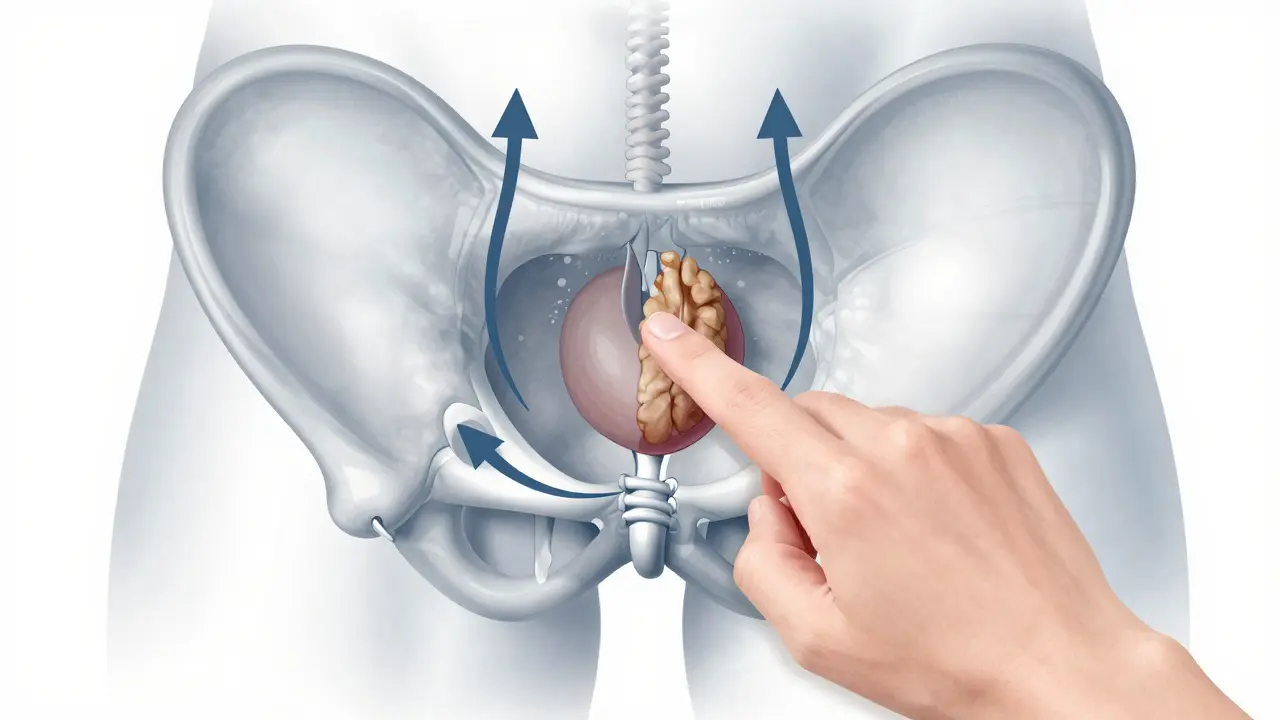
The prostate gland is about the size of a walnut, located 4 to 6 centimeters inside the anus, pressing against the front wall of the rectum. It’s not just a reproductive organ-it’s packed with nerve endings and plays a key role in urinary and sexual health. For men with chronic prostatitis, regular prostate massage can reduce inflammation by 25-30% and improve pelvic blood flow by up to 40%, according to clinical data from Czech urology studies. Many clients come for relief from pelvic pain, urinary discomfort, or sexual dysfunction. Others seek deeper, longer orgasms. A 2018 study in the Journal of Sexual Medicine found that prostate-induced orgasms lasted an average of 32 seconds-nearly twice as long as typical penile orgasms. For masseurs, this means you’re not just offering a service-you’re helping men reclaim comfort, confidence, and connection.Know the contraindications first
Before you even touch a client, you must screen for risks. Prostate massage is not safe for everyone. Never proceed if the client:- Is on blood thinners like warfarin or aspirin (risk of internal bleeding)
- Has acute prostatitis (inflammation with fever, chills, severe pain)
- Has had prostate surgery in the last 6 months
- Has active STIs or anal fissures
- Has a history of rectal cancer or recent rectal procedures
Preparation: Setting the stage
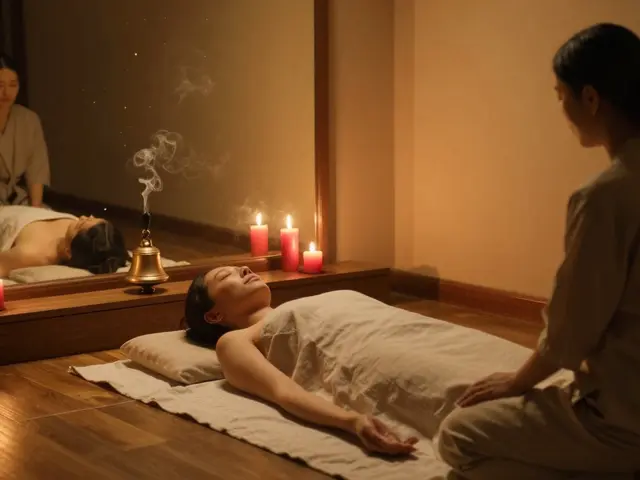
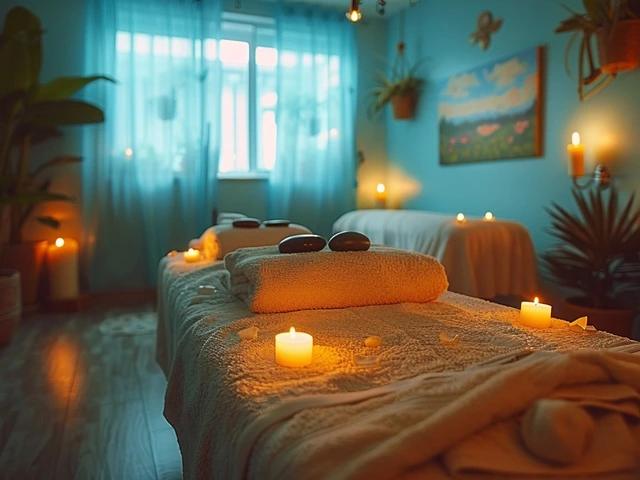
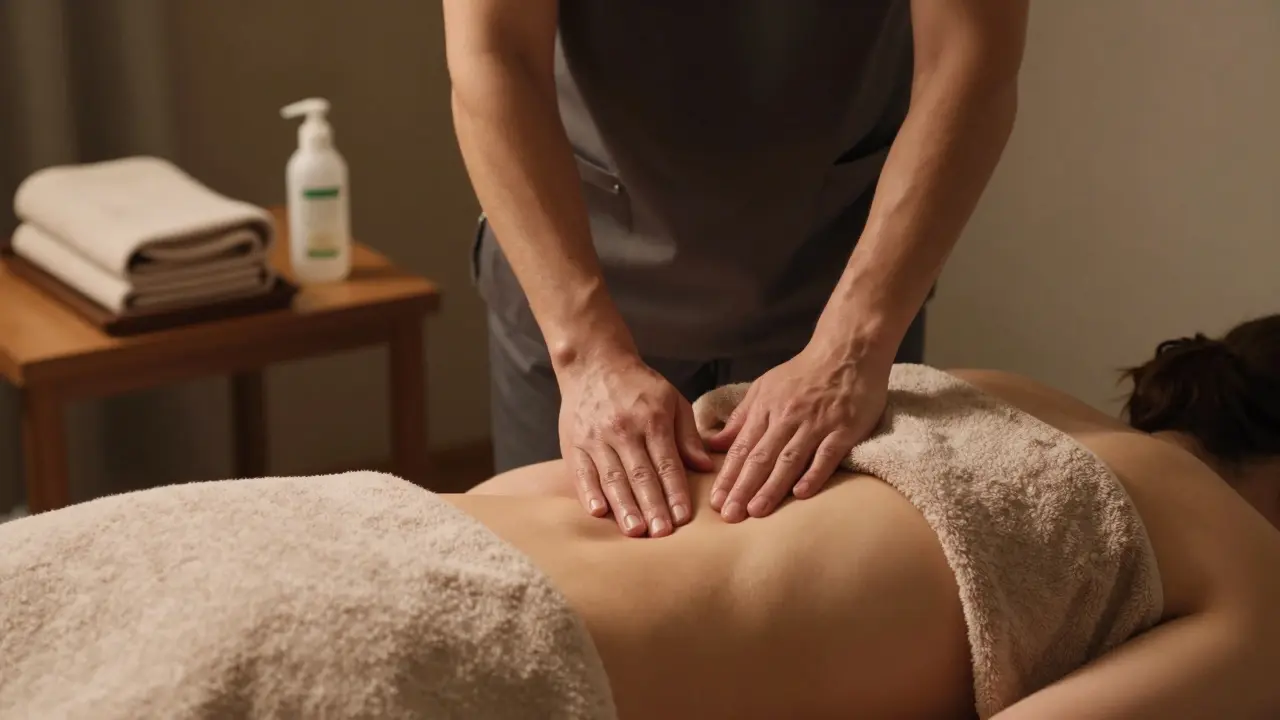
Prostate massage doesn’t start with a finger. It starts with trust. The first 20-40 minutes are dedicated to full-body relaxation. This isn’t optional-it’s essential. Tense pelvic muscles block access and increase pain. Tantric breathing, slow effleurage on the lower back, hips, and inner thighs, and warm stone therapy on the sacrum all help release tension. Use a quiet, warm room. Dim lights. Soft music. Let the client lie on their side or stomach-most prefer side-lying with knees bent. Offer a pillow under the hips. Some clients like a warm towel placed over the perineum. Don’t rush. If the client is still holding their breath after 20 minutes, keep going. You’re not here to perform a technique-you’re here to prepare a space where the body can let go.Step-by-step technique
Once the client is deeply relaxed, you begin the physical work. Follow this sequence exactly.- External perineal stimulation - Use your thumb or fingertips to make slow, circular motions over the perineum (the area between scrotum and anus). Apply light pressure-1 to 2 Newtons, about the weight of a teaspoon of sugar. Do this for 5-10 minutes. Watch for subtle shifts in breathing. That’s your cue the body is ready.
- Prepare for internal access - Put on clean, powdered latex gloves. Use a water-based lubricant-never oil or silicone. Warm the lube between your hands. Keep your nails short and smooth. Never use force.
- Insertion - Gently press the pad of your index finger against the anal opening. Wait. Let the sphincter relax naturally. If it tightens, pause. Breathe with the client. Slowly, gently, slide the fingertip in. Only 1-2 centimeters at first. Stop if there’s resistance.
- Locate the prostate - Once your finger is 4-6 cm inside, feel for a firm, round, slightly bumpy structure about the size of a walnut. It feels like a boiled egg pressed against the rectal wall. Don’t poke. Don’t press hard. Glide your fingertip over it.
- Massage technique - Use slow, rhythmic motions: either up-and-down strokes (from the base toward the urethra) or small circles. Keep pressure light-like stroking a cat’s fur. Do not push inward. Do not twist. Limit to 3-5 minutes total.
- Exit and closure - Slowly withdraw your finger. Return to perineal massage for 2-3 minutes. Offer a glass of water. Let the client rest. Do not rush them off the table.
What not to do
Many mistakes come from eagerness. Don’t:- Jump straight to internal massage without external prep
- Use too much pressure-the prostate is delicate, not a muscle to be kneaded
- Ignore client feedback-pain means stop immediately
- Use the same technique on every client-some need gentler touch, especially after 50
- Forget hygiene-gloves and lube aren’t optional
Tools: Hands vs. devices
Manual massage is the gold standard for training. It gives you tactile feedback you can’t get from a device. Vibrating prostate toys exist-they’re marketed as “smart” tools with pressure sensors and apps. But in 2023, only 17% of certified Czech masseurs used them regularly. Why? Because they can’t read subtle tension, fear, or discomfort the way a hand can. If you do use a device, it should only be after you’ve mastered manual technique. And never use it on a client without their explicit consent and understanding of how it works. The best tool you have is your awareness.Professional standards and certification
As of January 2026, Czech law classifies prostate massage as a health-related service under Vyhláška č. 457/2021 Sb. That means you must have:- Basic first aid certification
- Completion of an infection prevention course
- At least 60 hours of certified training (new standard as of June 2023)
- Proof of supervised practice (minimum 20 hours)
Client outcomes: What to expect
Most clients report:- Reduced pelvic pain within 2-4 sessions
- Improved urinary flow (especially after 6 weeks of weekly sessions)
- Stronger, longer orgasms (78% of positive reviews mention this)
- Decreased anxiety around sexual performance
Where this fits in your practice
Prostate massage isn’t a gimmick. It’s a high-value, low-volume service. In Prague, the average price is 1,850 Kč per hour. Premium studios charge up to 2,500 Kč. But you’re not selling a session-you’re selling safety, expertise, and transformation. Clients who receive this service often become loyal. They refer friends. They book monthly. They tell their partners. This isn’t just about revenue-it’s about building trust in a field where credibility is everything.Next steps for masseurs
If you’re serious about offering prostate massage:- Enroll in a ČAM-certified course-look for programs with live supervised practice
- Study pelvic anatomy: know the urethra, seminal vesicles, and nerve pathways
- Practice on consenting partners first-don’t start with paying clients
- Keep a client log: note reactions, pressure levels, duration, outcomes
- Stay updated-new guidelines come out yearly
Is prostate massage safe for all men?
No. It’s contraindicated for men with acute prostatitis, recent prostate surgery, blood-thinning medication, active STIs, or rectal conditions like fissures or cancer. Always screen clients thoroughly and request urologist clearance if there’s any doubt.
How long should a prostate massage session last?
A full session should take 60-90 minutes. The actual prostate massage lasts only 3-5 minutes. The rest is preparation-full-body relaxation, perineal stimulation, and post-massage integration. Rushing this process increases discomfort and risk.
Can I use lubricants other than water-based?
No. Oil-based or silicone lubes can damage latex gloves and cause irritation or infection. Water-based lubricants are the only safe option. Always use a fragrance-free, pH-balanced product designed for sensitive areas.
Why is tantric breathing part of the prep?
Tension in the pelvic floor blocks access and causes pain. Tantric breathing helps the client release deep muscular holding patterns. Without this, internal massage is ineffective and potentially traumatic. It’s not spiritual-it’s physiological.
Do I need special training to offer this service?
Yes. Since January 2022, Czech law requires at least 60 hours of certified training, including anatomy, contraindications, hygiene, and supervised practice. Untrained practitioners risk legal liability and harm to clients. Certification isn’t optional-it’s mandatory.
How often should clients receive prostate massage?
For therapeutic purposes (like prostatitis), twice a week for 4-8 weeks is typical. For maintenance or sexual wellness, once a month is sufficient. Never recommend daily sessions-overstimulation can cause irritation or nerve sensitivity.