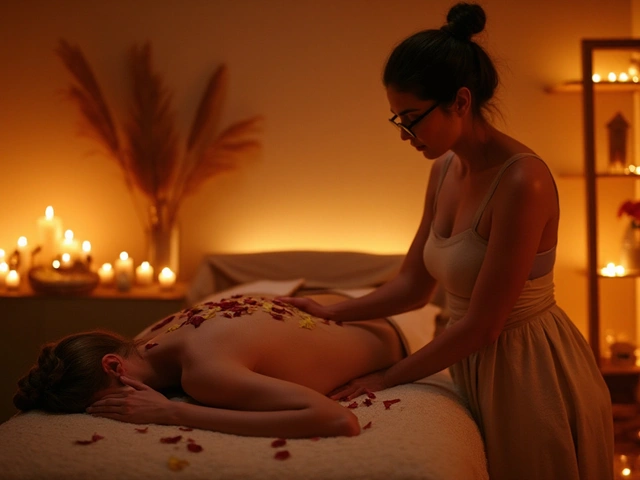
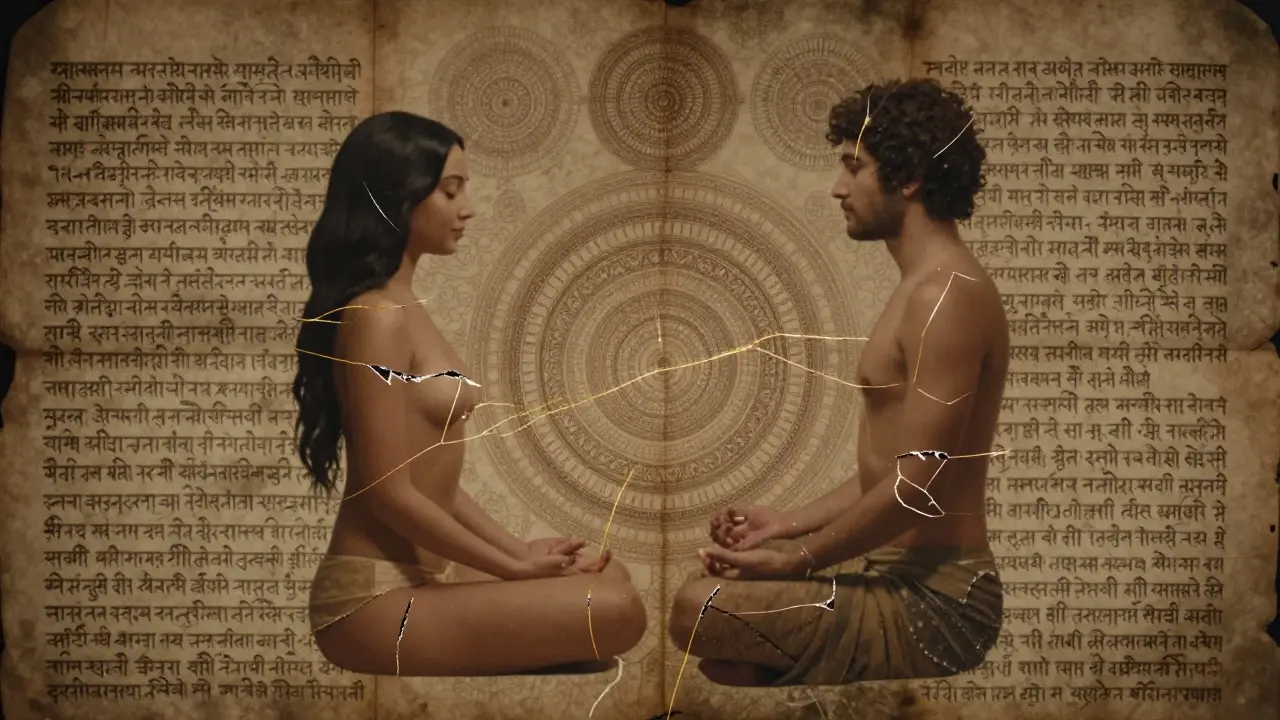
When you search for "tantra" online, what do you see? Chances are, it’s a photo of a man and woman wrapped in silk, half-naked, eyes closed, bathed in soft golden light. Maybe it’s a video titled "Tantric Massage for Deep Connection" - but the massage never happens. Instead, the camera lingers on skin, hips, and breath. These images sell. They get clicks. They drive sign-ups. But here’s the truth: tantra has nothing to do with this.
Tantra is not a sexual technique. It’s not a path to better orgasms. It’s not a way to "unlock your inner sensuality" through suggestive imagery. Tantra is an ancient spiritual tradition rooted in Hindu and Buddhist texts, dating back over 1,500 years. It’s about transforming consciousness - using breath, movement, meditation, and ritual to dissolve the ego and connect with something deeper than the physical body. Yet today, 90% of what’s marketed as "tantra" in the West has nothing to do with that. And the visuals? They’re the biggest lie.
How Tantra Got Reduced to a Stock Photo
| Feature | Authentic Tantra | Commercial "Neo-Tantra" |
|---|---|---|
| Main visual theme | Meditation, yoga postures, ritual objects, group circles | Half-naked couples, intimate poses, dim lighting, silk sheets |
| Model consent clarity | Explicit, documented consent for context of use | Often unverified; models may not even be participants |
| Cultural context | Respects Indian roots, avoids sacred symbols as decoration | Uses mandalas, bindis, incense as "exotic" props |
| Marketing claims | "Deep self-awareness," "emotional healing," "spiritual growth" | "Unlock sexual energy," "Become a better lover," "Orgasmic awakening" |
| Source of imagery | Real participants in actual sessions | Professional models in studio shoots |
Look at the numbers. On Adobe Stock, there are over 2,000 video clips tagged "tantra." On Shutterstock, one of the top-selling clips - ID 3668474759 - shows a man and woman embracing in a dim room, barely clothed. It’s labeled "Tantric Massage Practice." It costs $79. It has nothing to do with tantra. It’s just sex, dressed up in incense and candles.
This isn’t just misleading - it’s exploitation. The same images are used to sell $2,000 weekend retreats, "tantric coaching" packages, and online courses promising "sexual mastery." But when people show up, they’re not learning breathwork or energy awareness. They’re handed a script for partner massage that ends in mutual masturbation. And they’re angry. A 2022 survey by the Czech Society for Spiritual Practices found that 68% of participants felt deceived. They signed up for spiritual growth. They got a sex workshop.
What Ethical Tantra Photography Looks Like
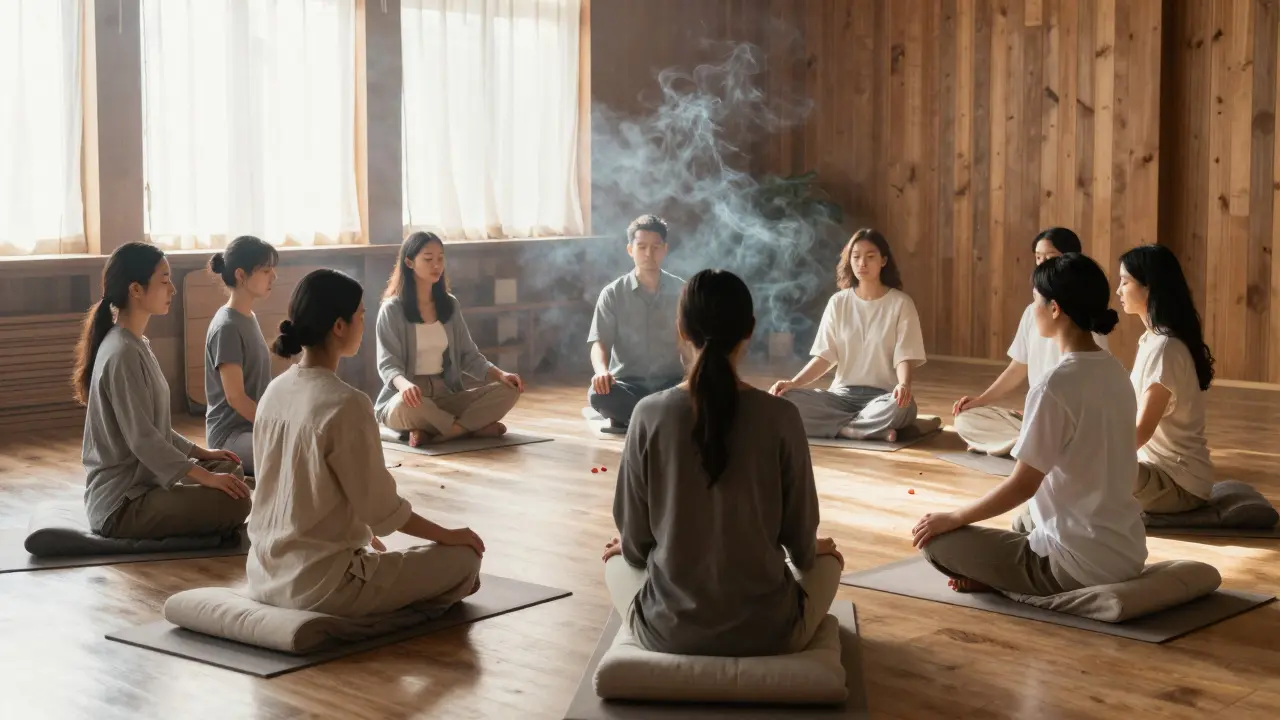
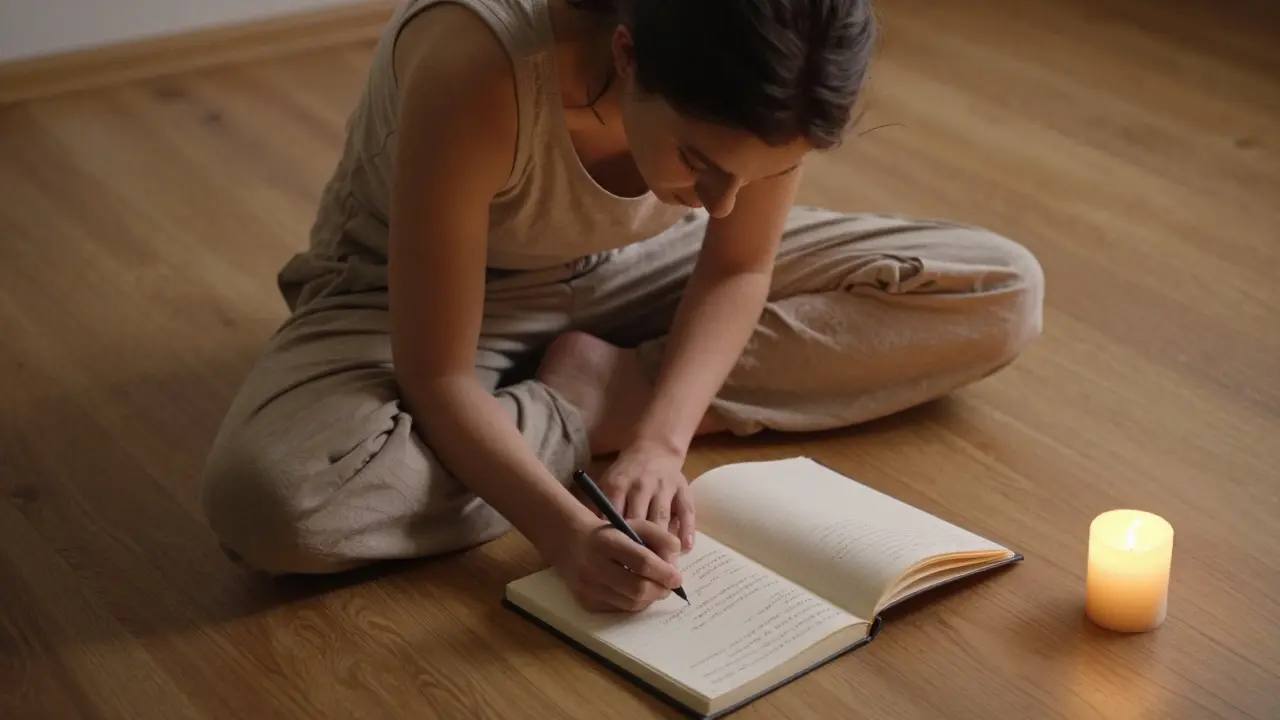
There are schools - real ones - that do it right. Paulus Yoga & Consciousness, based in Prague, uses photos of people sitting in silence, hands resting on knees, eyes closed. Their videos show group circles, chanting, journaling, and quiet one-on-one conversations. No skin. No seduction. Just presence.
Andrejka Sobotová from Tantra Living Art says it plainly: "We only use images from our actual sessions. People are dressed normally. They’re talking, meditating, crying, laughing. We never stage intimate moments. If someone wants to see what tantra really is, they’ll see a human being, not a fantasy."
Here’s what ethical visual content requires:
- Transparency - If the content is not from an authentic tantric practice, say so. Label it: "Modern sensual exploration," "Intimacy coaching," "Body awareness workshop." Don’t call it tantra.
- Consent - Every person in a photo or video must give written, informed consent for how their image will be used. This isn’t optional. It’s legal in the EU under GDPR. Many commercial operators ignore this.
- Cultural respect - Don’t use Hindu deities, Sanskrit mantras, or sacred mudras as background decor. These aren’t aesthetic props. They’re living spiritual symbols.
- Accuracy - If your course teaches breathwork and chakra awareness, your visuals should reflect that. Don’t use a photo of two people hugging to sell a meditation retreat.
- Authenticity - Use real students, not models. Real spaces, not staged studios. Real moments, not choreographed poses.
One of the most telling signs of an ethical teacher? They’ll tell you exactly who they trained with, where, and for how long. Only 31% of commercial tantra businesses list their teacher’s credentials. Over 89% of authentic schools do.
The Cost of Deception
It’s easy to think, "So what? People like sexy photos. It sells." But the cost is real.
First, it erodes trust. People who get burned by fake tantra avoid all spiritual practices. They walk away from meditation, yoga, breathwork - everything. They feel fooled, not just by a business, but by spirituality itself.
Second, it harms the tradition. Tantra is a sacred path in India. When Western businesses turn it into a pornographic brand, they strip it of its meaning. This isn’t cultural appreciation. It’s cultural theft. Dr. Martin Vacek, a religious studies professor at Charles University, calls it "a violation of cultural dignity."
Third, it’s illegal. A 2022 legal analysis by Vacek & Partners found that 63% of websites selling "tantra massage" violate the Czech Personal Data Protection Act. They don’t disclose how photos will be used. They don’t get proper consent. They use images from stock libraries without even knowing who’s in them.
And the market is catching on. The Czech Ministry of Culture, working with the Czech Society for Spiritual Practices, is finalizing an ethical code for spiritual imagery - set to launch in early 2026. One rule? No visuals that create false expectations. No intimate poses for non-sexual practices. No mislabeling.
How to Spot the Real From the Fake
If you’re looking for real tantra - not a marketing gimmick - here’s how to tell:
- Check the teacher’s background. Do they mention lineage? Training in India or Nepal? Years of apprenticeship? If it says "certified in 3 days," run.
- Look at the imagery. Are people fully clothed? Are they sitting, breathing, listening? Or are they half-naked, entwined, in a bedroom?
- Read the course description. Does it mention energy, awareness, emotional release, or inner silence? Or does it promise "better sex," "orgasm control," or "sexual magnetism"?
- Search for reviews from people who’ve attended multiple sessions. Authentic schools have long-term students. Fake ones have one-time buyers.
- Ask: "Can I see a video of a real session?" Not a promo clip. A real one. If they say no, they’re hiding something.
There’s a quiet revolution happening. More people are waking up. They’re tired of being sold fantasy. They want truth. And the schools that give it - with honest photos, real stories, and deep respect - are thriving. Their retention rate? 89%. The average lifespan of their business? Over 12 years. Meanwhile, the flashy, sexy, misleading ones? They disappear in under four.
It’s Not About Censorship. It’s About Integrity.
This isn’t about banning sexy photos. It’s about honesty. If you want to teach sensual connection, do it. Call it what it is: intimacy coaching, bodywork, or relationship therapy. Don’t hide behind the name of a sacred tradition.
Tantra deserves better. So do the people who seek it. And so do the people who take the photos, run the businesses, and teach the classes. When you choose integrity over clicks, you don’t just avoid scandal - you build something that lasts.
The next time you see a "tantric" image, ask yourself: Is this showing me the path - or selling me a fantasy?