
Ever wondered if that post-climax "refractory period"-that sudden drop in energy and desire-is actually a biological law or just a habit? Most men assume the two are inseparable. You climax, you ejaculate, you’re done. But what if you could separate those events? Male multiple orgasms is the ability to experience several climactic peaks during a single sexual encounter without ejaculating. It’s not magic; it’s physiology. By learning to decouple orgasm from ejaculation, you can extend intimacy, boost stamina, and explore a deeper range of pleasure.
This isn't about holding your breath until you turn blue. It’s about mastering specific physical controls, primarily involving the pelvic floor muscles and breath work. While women often experience multiple orgasms naturally due to different physiological structures, men must actively train this skill. Research suggests that with consistent practice-typically three to six months of daily exercises-most men can achieve at least two or three non-ejaculatory orgasms within an hour. Ready to stop viewing sex as a sprint and start treating it as a marathon? Let’s look at how to make it happen.
Key Takeaways
- Separation is key: The core skill is distinguishing between the sensation of orgasm (the peak) and ejaculation (the release).
- Pelvic Floor Control: Strengthening the pubococcygeus (PC) muscle allows you to physically block the ejaculatory reflex while allowing the orgasmic wave to pass.
- Breath Work: Deep, rhythmic breathing helps distribute sexual energy throughout the body rather than concentrating it solely in the genitals.
- Time Commitment: Expect 3-6 months of regular practice (20-30 minutes daily) to see reliable results.
- Mental Shift: Move away from the goal-oriented mindset of "finishing" toward experiencing the journey of arousal.
The Physiology Behind the Phenomenon
To understand how to hack your system, you first need to know how it works. In standard male sexuality, orgasm and ejaculation are tightly linked. When stimulation reaches a certain threshold, the nervous system triggers a reflex: contractions of the pelvic muscles push semen out (ejaculation), accompanied by intense pleasure (orgasm). Immediately after, prolactin levels spike, causing the refractory period-a recovery phase where further arousal is difficult or impossible.
Genital multi-orgasm, as studied in sexology, involves breaking this link. You reach the point of no return (POI) for ejaculation but use muscular control to prevent the expulsion of semen. Because ejaculation doesn’t occur, the prolactin surge is significantly reduced or delayed. This keeps your blood flow high and your sensitivity intact, allowing you to remain erect and aroused. From there, you can continue stimulation to trigger subsequent waves of pleasure.
| Feature | Standard Ejaculatory Orgasm | Non-Ejaculatory Orgasm |
|---|---|---|
| Refractory Period | Immediate and prolonged | Minimal or absent |
| Erection Status | Subsides quickly | Maintained |
| Energy Level | Drop in energy (post-coital somnolence) | Sustained or increased vitality |
| Primary Goal | Release/Ejaculation | Pleasure/Energy circulation |
Step 1: Master Your Pelvic Floor
You wouldn’t try to run a marathon without strong legs, right? The same logic applies here. The primary tool for blocking ejaculation is the pubococcygeus (PC) muscle. This muscle runs from your pubic bone to your tailbone and forms part of the pelvic floor. It’s the same muscle you use to stop urination mid-stream.
Most men have weak or uncoordinated PC muscles. To fix this, you need targeted exercises. Here is a simple routine to start today:
- Identify the Muscle: Next time you urinate, try to stop the flow mid-stream. That tension you feel? That’s your PC muscle. Note: Don’t do this regularly as a test, as it can disrupt bladder function. Just find it once.
- Kegel Exercises: Contract the PC muscle as hard as you can. Hold for 5 seconds. Relax for 5 seconds. Repeat 10 times. Do this three sets per day.
- Progressive Overload: As you get stronger, increase the hold time to 10 seconds and the repetitions to 20 per set.
- Reverse Kegels: Learn to relax the pelvic floor completely. Push out gently, like you’re trying to urinate or fart slightly. This prevents tension from building up too early.
Consistency matters more than intensity. Doing these exercises while watching TV or sitting at your desk makes them easy to integrate into your life.
Step 2: Learn Breathwork for Energy Distribution
If you watch any athlete, you’ll notice they don’t hold their breath when exerting effort. Yet, many men unconsciously hold their breath or take short, shallow gasps during sex. This traps sexual energy in the genital region, accelerating the path to ejaculation.
Deep abdominal breathing acts as a pressure valve. When you breathe deeply into your belly, you activate the parasympathetic nervous system, which helps regulate arousal levels. Try this technique during solo practice:
- Inhale slowly through your nose for a count of four, expanding your stomach.
- Exhale slowly through your mouth for a count of four.
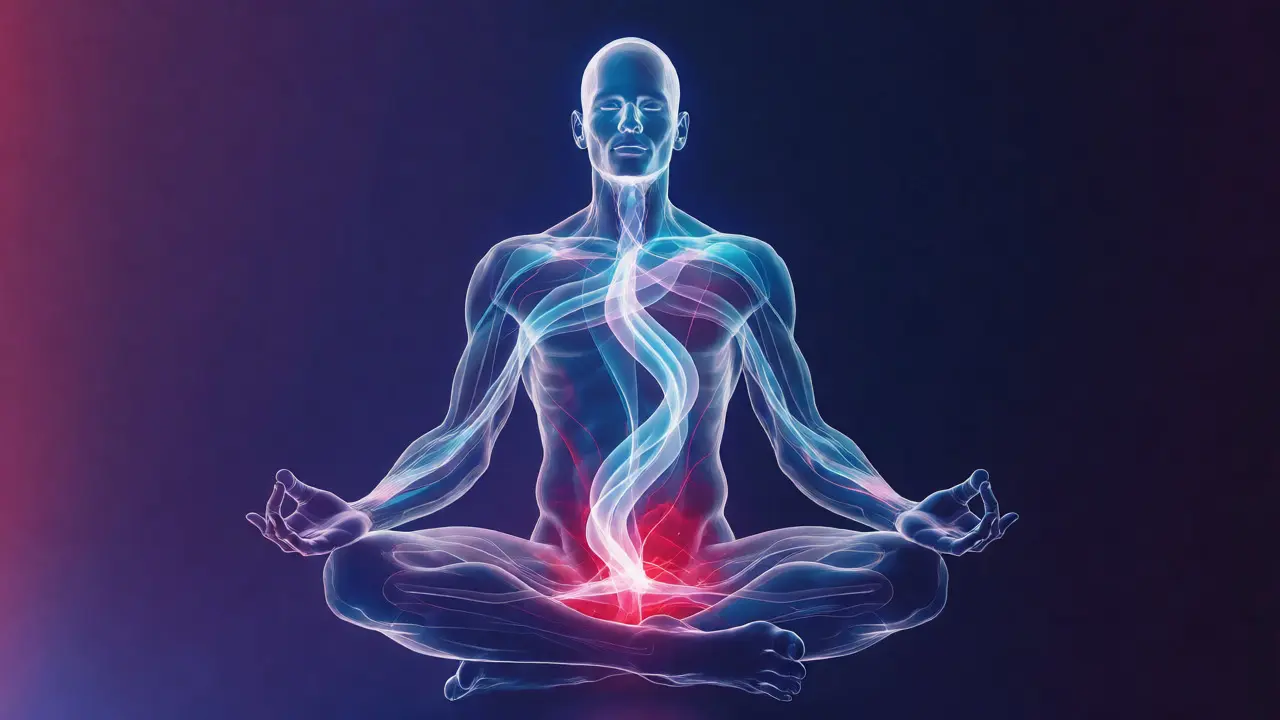
- As you approach high arousal, visualize the energy moving up your spine and spreading out to your chest, arms, and head.
- Keep your jaw relaxed. Tension in the face often mirrors tension in the pelvis.
This doesn’t mean you should be meditating while having sex. It means staying aware of your breath. If you catch yourself gasping, slow down. Breathe deep. Reset.
Step 3: Solo Practice - Mapping Your Arousal Curve
Before attempting this with a partner, master it alone. Solo practice removes performance anxiety and lets you focus entirely on bodily sensations. You need to learn to identify the "Point of No Return" (PONR) for ejaculation versus the onset of orgasm.
Start masturbating with the intent to delay ejaculation. Use a lighter touch than usual. Pay attention to the rising heat and tension in your pelvis. There is a distinct moment before ejaculation where the feeling shifts from "building" to "inevitable." Your goal is to stop stimulation just before that inevitable shift.
When you hit that edge:
- Stop all movement immediately.
- Take a deep breath.
- Gently contract your PC muscle (a moderate squeeze, not a death grip).
- Wait for the urge to ejaculate to subside. This might take 10-30 seconds.
- Resume stimulation once the urgency fades.
Repeat this cycle. At first, you might only manage one or two delays. That’s normal. The objective is not to last forever, but to recognize the signals. Over time, you’ll notice that sometimes, even without ejaculating, you can experience a full-body wave of pleasure-an orgasm. This is the breakthrough moment.

Step 4: Integrating with a Partner
Transitioning from solo to partnered sex adds complexity. Communication becomes crucial. Your partner needs to know that stopping or changing pace isn’t rejection; it’s strategy.
Here’s how to bring it into the bedroom:
- Set Expectations: Tell your partner you’re experimenting with new techniques. Frame it as enhancing mutual pleasure, not fixing a problem.
- Use Positions That Allow Control: Positions where you have more control over depth and speed, such as missionary or cowgirl, are easier to manage initially. Avoid positions that force rapid thrusting until you’ve mastered the basics.
- Signal Your Need to Pause: Agree on a subtle signal, like a hand on their hip or a specific word, that tells them to pause or change rhythm.
- Focus on Connection: During the pause, maintain eye contact or kiss. This keeps the emotional connection alive and prevents the moment from feeling awkward.
Remember, the goal isn’t always to have five orgasms. Sometimes, simply extending the session by ten minutes and sharing the heightened sensitivity with your partner is enough. Pressure to perform multiple times can kill the vibe. Keep it playful.
Common Pitfalls and How to Avoid Them
Many men fail because they treat this like a sprint. They expect immediate results or get frustrated when they ejaculate prematurely. Here are the most common mistakes:
1. Squeezing Too Hard: Trying to clamp down on the PC muscle with maximum force can actually trigger the ejaculatory reflex. Think of it as a gentle lift, like stopping a small stream of water, not lifting heavy weights.
2. Ignoring Mental State: Anxiety creates tension. If you’re worried about losing your erection or failing to have another orgasm, you’ll likely ejaculate faster. Practice mindfulness. Stay present in the sensation, not the outcome.
3. Neglecting Foreplay: Rushing into penetration increases arousal too quickly. Spend ample time on foreplay to build a gradual, sustainable rise in excitement rather than a sharp spike.
4. Unrealistic Expectations: Not every man will become a multi-orgasmic champion. Some may find that one extended, non-ejaculatory climax is perfectly satisfying. That’s okay. The benefit is improved control and stamina, regardless of the number of peaks.
Troubleshooting: What If It Doesn’t Work?
If you’ve been practicing for three months and still struggle, consider these factors:
- Medical Issues: Conditions like prostatitis or hormonal imbalances can affect ejaculatory control. Consult a urologist if pain or persistent issues arise.
- Desensitization: Are you using excessive lubrication or a very tight grip during masturbation? Adjust your technique to mimic partnered sex more closely.
- Psychological Blocks: Guilt or shame around sexuality can hinder relaxation. Working with a certified sex therapist can help uncover these barriers.
Is male multiple orgasm safe?
Yes, it is generally considered safe. Blocking ejaculation does not cause harmful backflow of semen into the bladder in healthy individuals. However, if you experience pain or discomfort, consult a healthcare provider. Retrograde ejaculation (where semen goes into the bladder) can occur if the sphincter is overly tense, but this is usually harmless and resolves on its own.
How long does it take to learn?
On average, it takes 3 to 6 months of consistent practice (20-30 minutes daily) to reliably achieve non-ejaculatory orgasms. Individual results vary based on natural pelvic floor strength, mental focus, and consistency of training.
Do I lose my erection if I don't ejaculate?
No, typically you maintain your erection. Since ejaculation is the primary trigger for the refractory period and loss of erection, avoiding it keeps blood flow high and arousal sustained. Some men may experience slight softening during the pause, but it usually returns quickly with continued stimulation.
Can I still ejaculate after having multiple orgasms?
Absolutely. Many men choose to have one or more non-ejaculatory orgasms and then allow themselves to ejaculate at the end of the session. This provides the best of both worlds: extended pleasure followed by the traditional release and relaxation.
Does alcohol affect this ability?
Yes, alcohol can interfere with nerve sensitivity and muscle control. While it might lower inhibition, it often makes it harder to distinguish the subtle signals needed to block ejaculation. Practicing sober yields better results.
Learning to separate orgasm from ejaculation changes the landscape of male sexuality. It transforms sex from a task with a finish line into an exploration of sensation. Start small. Focus on your breath. Train your muscles. Be patient with your body. The rewards aren’t just in the number of climaxes, but in the confidence and presence you bring to every intimate moment.