The Shift from Talk to Touch in Trauma Therapy
For decades, if you went to a psychologist for trauma, you sat on a couch and talked. You processed memories with words. But what happens when the trauma lives in your body, not just your mind? This is where the landscape of mental health is changing fast. We are seeing a rise in Tantric therapy as an integrative approach combining traditional psychological methods with Eastern practices focused on transforming sexual energy. It’s not just about better sex; it’s about using that powerful energy to heal deep wounds.
In Melbourne, and increasingly across Australia and Europe, psychologists and sexologists are bridging the gap between Western science and ancient wisdom. They are moving away from viewing sexual energy solely as a source of pathology or conflict. Instead, they see it as a reservoir for creativity, spiritual growth, and physical resilience. If you have ever felt stuck in your head while your body screamed something different, this shift might be exactly what you need.
What Is Tantric Therapy Really?
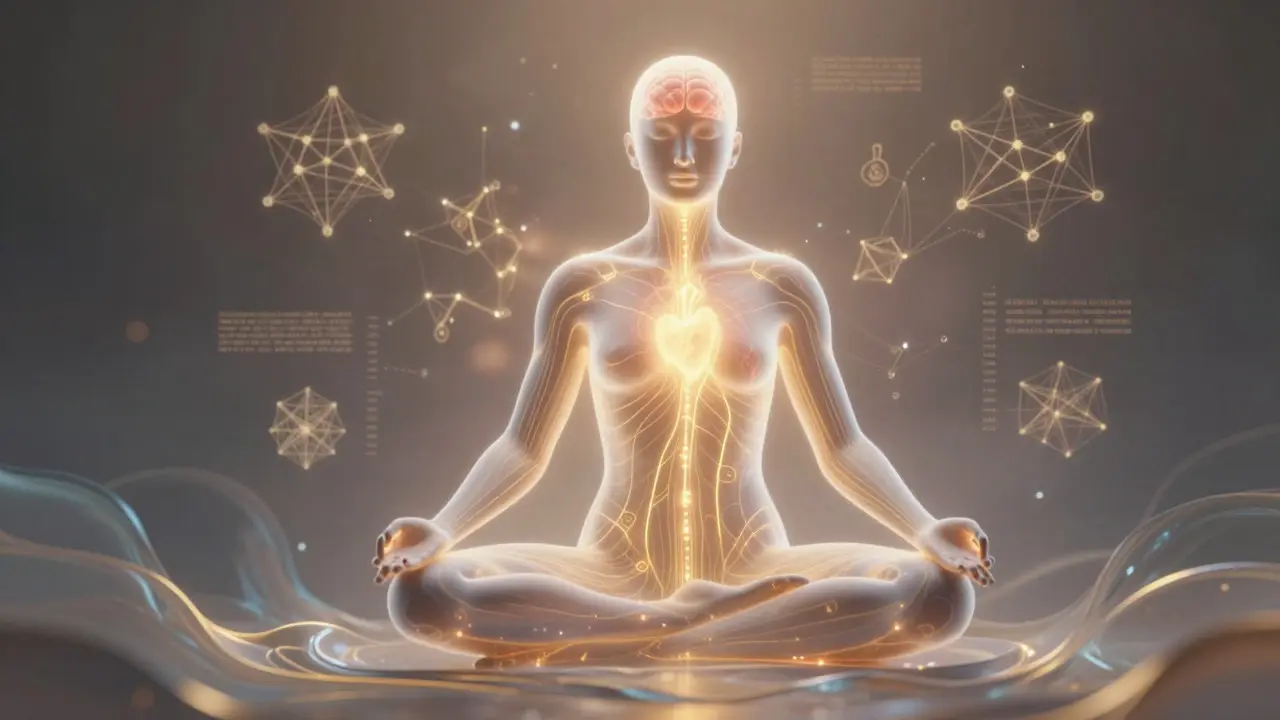
Let’s clear up the confusion right now. When we talk about tantra in a clinical setting, we aren’t talking about exotic rituals or purely recreational activities. We are talking about a structured therapeutic framework. At its core, Tantric practice in therapy involves the redirection of sexual energy through specific energetic channels to areas like the heart, brain, and glands. This concept draws heavily from Taoist traditions, particularly the work of Mantak Chia and Michael Winn, who detailed how couples can engage in "dualistic cultivation."
This isn't magic; it's physiology meeting psychology. The goal is to help clients maintain presence without being overwhelmed by automatic responses-like ejaculation in men or dissociation in women. By learning to control and redirect this energy, individuals can break cycles of reactive behavior. For those without partners, there are solo cultivation techniques that allow people to harness this energy for daily life, boosting focus and emotional stability. It’s about closing the gap between reason and spirit, mind and body.
Why Traditional Psychology Sometimes Falls Short
You might wonder why we need a new approach when Freud gave us psychoanalysis. Sigmund Freud’s original theories in 1895 did recognize that traumatic experiences often had sexual characteristics. He saw how unprocessed trauma could manifest as hysterical neurosis, showing up as physical symptoms. His case study of Anna O. demonstrated how hypnosis and free association could uncover hidden traumas.
But here is the catch: Freud viewed sexual energy primarily through the lens of conflict and repression. In contrast, modern tantric approaches view this same energy as a potential for transformation. Critics might argue that some tantric techniques risk inducing an "auto-hypnotic state" that bypasses rational processing. While valid, proponents argue that under skilled guidance, this state allows access to subconscious material that talk therapy simply cannot reach. It’s the difference between describing a fire and feeling the heat. For many trauma survivors, the body holds the truth that words obscure.

Healing Through the Body: Somatic Integration
Trauma changes your nervous system. It keeps you in fight, flight, or freeze mode. Tantric therapy addresses this directly. By focusing on breath, touch, and energy flow, therapists help clients regulate their autonomic nervous system. This is especially relevant for women navigating major life transitions, such as menopause.
Research by Diana Richardson and Janet McGeever highlights how women naturally enter a "more tantric phase" during menopause, focusing on creativity and spirituality rather than just reproductive function. Instead of viewing hormonal changes as a decline, this framework reframes them as an opportunity for deeper connection and self-discovery. Women report improved quality of life and sexual satisfaction after engaging in these programs. It’s not about fixing a broken part; it’s about unlocking a dormant resource.
| Feature | Traditional Psychoanalysis | Integrative Tantric Therapy |
|---|---|---|
| Primary Focus | Cognitive processing and verbal narrative | Somatic experience and energy regulation |
| View of Sexual Energy | Potential source of conflict/pathology | Source of creativity and healing |
| Methodology | Talk therapy, free association | Breathwork, meditation, controlled touch |
| Goal | Insight and understanding | Integration of mind, body, and spirit |
The Certification Gap: What You Need to Know
If you are looking for a therapist, you need to be smart. One of the biggest challenges in this field is the lack of formal regulation. In countries like Germany or the Netherlands, there are registered associations for integrative sexology. In other regions, including parts of Central Europe and even some Australian states, the landscape is fragmented.
There is no single government-recognized license for "Tantric Therapist." This means practitioners often combine official psychology degrees with certifications from international bodies like the International School of Temple Arts (ISTA) or training under masters like Mantak Chia. These certifications are respected in the community but may not be recognized by local health ministries as medical specialties. This creates ethical gray areas. Always check if your practitioner has a background in licensed psychology or medicine before adding tantric techniques to your care plan.

Who Benefits Most From This Approach?
This isn't for everyone. If you are dealing with acute psychosis or severe instability, traditional stabilization therapies are safer first steps. However, tantric integration shines for specific groups:
- Couples with intimacy issues: Those struggling with performance anxiety or emotional disconnection can use dualistic cultivation techniques to rebuild trust and presence.
- Individuals with sexual trauma: People who feel disconnected from their bodies due to past abuse can slowly reclaim ownership through safe, guided somatic exercises.
- Women in mid-life transition: As noted by Richardson and McGeever, menopausal women often find renewed vitality and purpose through these practices.
- High-performers seeking balance: Professionals who feel burned out can learn to redirect sexual energy into creative and professional pursuits without depletion.
Finding the Right Practitioner
So, how do you find someone qualified? Start by looking for credentials. A good practitioner will hold a license in psychology, counseling, or sexology, plus additional training in tantra. Look for affiliations with established schools like ISTA. Ask questions during your initial consultation. Do they prioritize consent? Do they explain the physiological basis of their techniques? Are they comfortable discussing boundaries?
Avoid anyone who promises quick fixes or uses vague spiritual jargon without grounding it in practical psychology. The best therapists blend the scientific rigor of Western medicine with the holistic depth of Eastern traditions. They don't just tell you what to think; they show you how to feel safely again.
The Future of Integrative Care
We are at a turning point. The demand for holistic health is growing. People are tired of being treated as separate parts. They want wholeness. As more research emerges supporting the efficacy of somatic and energy-based therapies, we can expect greater institutional acceptance. Until then, the burden is on us-the seekers-to do our homework. Choose wisely, ask hard questions, and remember that healing is a journey, not a destination.
Is tantric therapy covered by insurance?
Generally, no. Because "tantric therapy" is not a standardized medical diagnosis code, most insurance plans will not cover the specific tantric components. However, if you see a licensed psychologist who incorporates these techniques, you may be able to claim the session under general psychotherapy codes. Always check with your provider first.
Do I need a partner to benefit from tantric therapy?
No. While "dualistic cultivation" involves partners, there are extensive solo practices known as "individual cultivation." These techniques allow you to manage and redirect your own sexual energy for personal growth, stress reduction, and creative enhancement without needing a partner present.
Is this therapy religious?
Not necessarily. While Tantra has roots in Hinduism and Buddhism, modern clinical applications are largely secular. They focus on the physiological and psychological mechanisms of energy management rather than religious dogma. You can practice these techniques regardless of your spiritual beliefs.
How long does it take to see results?
Results vary widely based on the individual and the severity of their issues. Some people report immediate shifts in relaxation and presence after a few sessions. Deeper trauma work may require months of consistent practice and therapy. It is a skill set that improves with time and dedication.
What qualifications should a tantric therapist have?
Look for a dual qualification. Ideally, they should have a license in psychology, counseling, or medicine, combined with certification from a reputable tantra school like the International School of Temple Arts (ISTA). This ensures they understand both the clinical risks and the traditional techniques.